


Federal authorities say they identified “several deficiencies” on the tracks near the CN freight train derailment in Repentigny earlier this month, prompting the mayor to call for a pause on all train activity in the area.
They add that while some of the 172-car freight train carried dangerous chemical residue, they did not leak when 46 cars derailed on July 5. No one was injured.
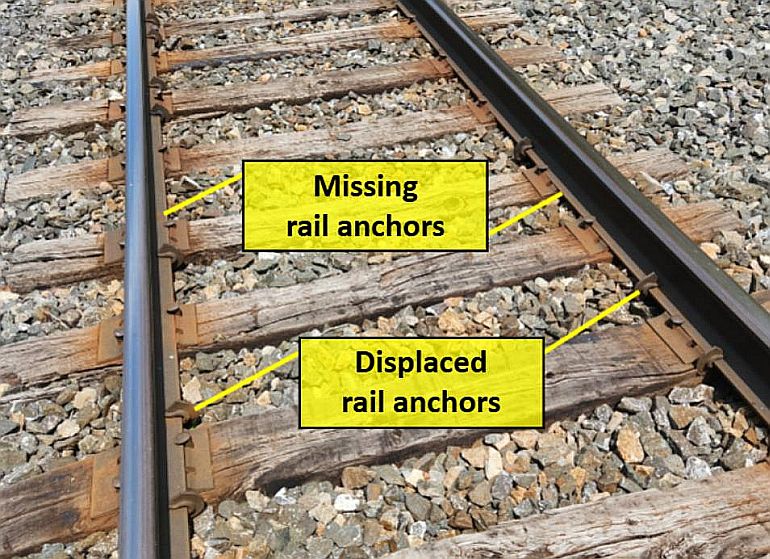
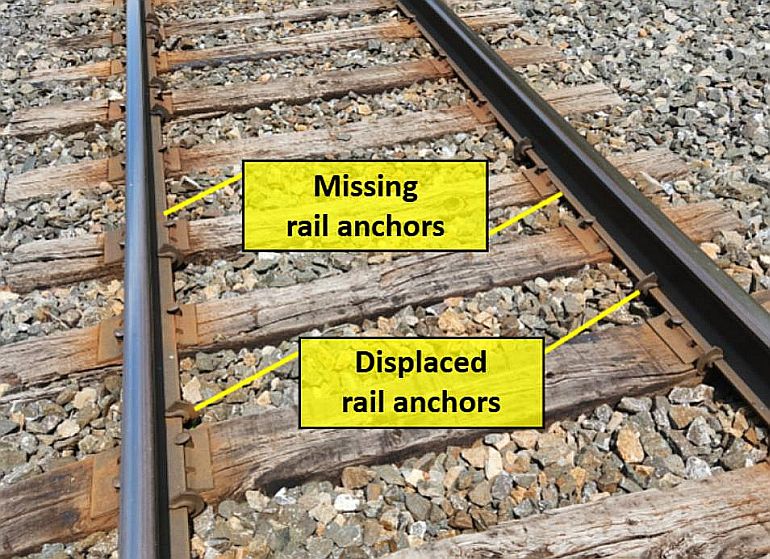
In a press release Thursday, the Transportation Safety Board of Canada (TSB) said an initial assessment near the crash site showed several anchors — which are devices that hold the rails together — were missing or moved across key segments of the tracks, which could have caused the derailment.
“Missing or displaced rail anchors could lead to a local redistribution of stresses in the rail and reduce the longitudinal and lateral stability of the track, which could increase the risk of derailment due to track buckling,” wrote Vincenzo De Angelis, director of investigations – rail/pipeline at TSB, in a report to Transport Canada.
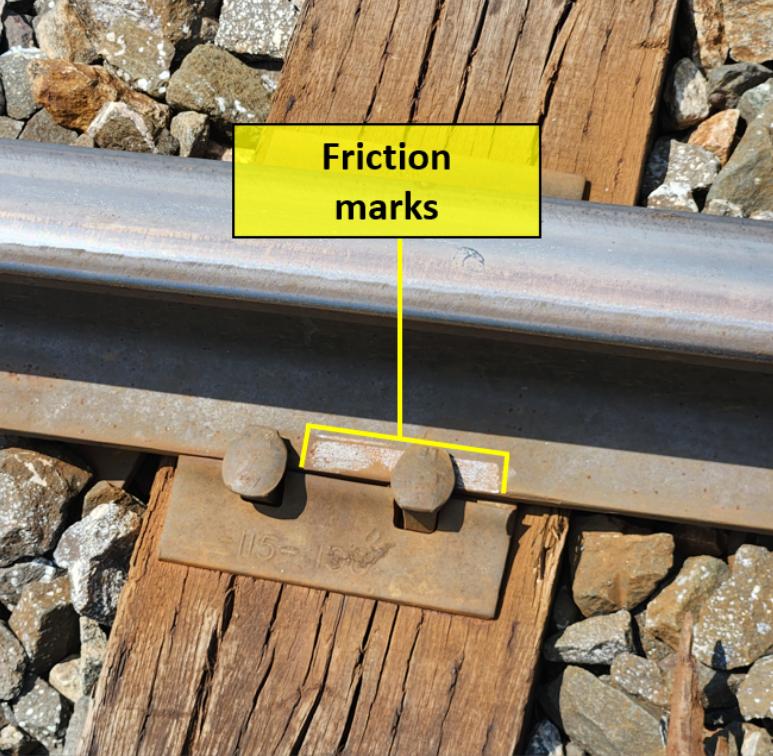
The report also says the rail showed signs of friction from the spikes against the ties, and the rails shifted by as much as almost nine cm in some spots.
“Specifically, between Mile 118 and Mile 121, rail anchors were missing or had displaced in a few locations. Furthermore, several ties were skewed and were no longer perpendicular to the rails,” De Angelis wrote.
He urged Transport Canada to verify the integrity of the tracts and to inform the safety board of what action, if any, will be taken.
According to investigators, the CN freight train applied an emergency brake after passing the railway crossing on Le Bourg-Neuf Boulevard in Repentigny.
“Once the train came to a stop, the crew observed that several cars had derailed,” De Angelis wrote. “The derailed cars were scattered in various positions near residences on both sides of the right-of-way.”
On Thursday, La Presse reported that CN and Transport Canada were aware of deterioration of the track near the crash site. In 2023, a citizen-led initiative had flagged to CN about rails sagging by several cms as well as noise and vibrations noticeable by neighbourhood residents when trains passed.
Repentigny Mayor Nicolas Dufour says the investigators’ findings are troubling, especially as the railroad line runs through a residential neighbourhood.
“The dilapidated state of the rail infrastructure — that is extremely concerning. CN has the power to fix this, so it should do so as quickly as possible,” he said in a phone interview.
Dufour said he wants the federal transportation department to put operations on hold until the necessary repairs are made. The Repentigny city council unanimously adopted a motion on Tuesday calling on the minister to consider permanently reducing speed limits on freight trains in residential areas.
In a statement to CityNews, CN said the derailment was caused by “a thermal misalignment of the rail.”
“A thermal misalignment occurs when extreme temperatures cause rail to shift out of alignment. CN believes that this was caused by the misapplication of the Company’s engineering standards related to rail distressing during the work that was conducted on the level crossing in the spring of 2026. At this stage, CN does not believe speed, train handling and mechanical issues were causes of the derailment,” the statement reads.
“The track has been inspected by the appropriate authorities, and train movements have been authorized at a restricted speed. Additional inspections are also being conducted by CN to closely monitor the track and ensure it continues to perform as expected. CN welcomes further inspections by Transport Canada before any change is made to the current speed restriction.”
In his advisory, De Angelis says it was 29 degrees the day the train derailed. The locomotive was travelling southward at 77 km/h.
Because of thermal expansion of railways, trains must reduce their speed by 16 km/h when the temperature reaches 30 Celsius.

“I find this concerning because we were really right on the verge of triggering a speed reduction by Transport Canada,” Dufour said. “I think the City of Repentigny’s request is more than legitimate.”
According to Transport Canada, trains running through the area have to reduce their speed by about 15 km/h until inspections, testing, and follow-up work have been completed.
Dufour said he is relieved to see the safety board handling the case “with great rigour” and transparency.
The safety board says its investigation is ongoing and may result in recommendations to address safety deficiencies.
— With files from The Canadian Press
Add CityNews Montreal as a trusted source on Google to see more local stories from us.
