

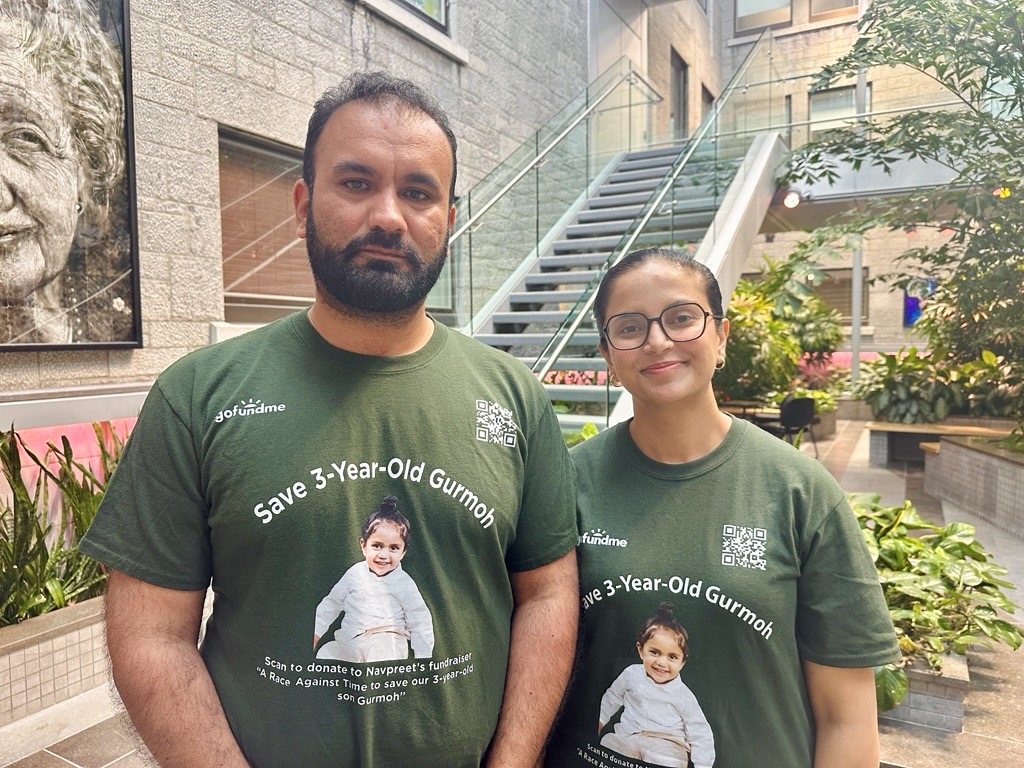

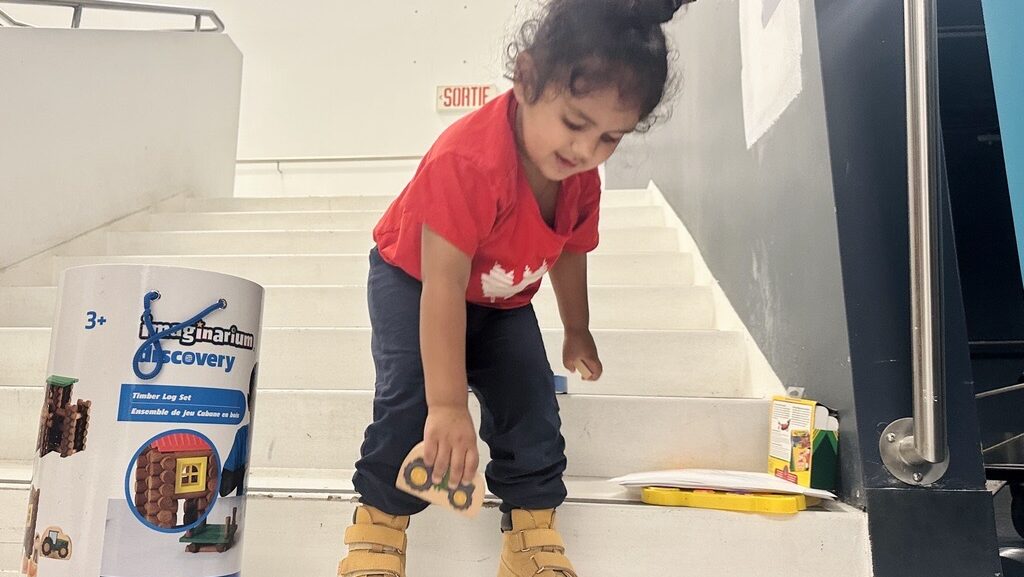
One in 12 Canadians are living with a rare disease, including three-year-old Gurmoh Singh Gill, who has hereditary spastic paraplegia (HSP).
“It’s a race against time,” said Stalinjeet Gill, Gurmoh’s dad. “You enjoy each and every milestone your child goes through, you know, walking, sitting, talking, first words like mom and dad, right? And then one day someone tells you, ‘oh, he’s going to lose all of that.’ It’s heartbreaking.”
As the disease progresses, his son — a typical toddler who loves fire trucks with a smile that lights up the room — will lose the ability to walk, talk and experience cognitive decline.
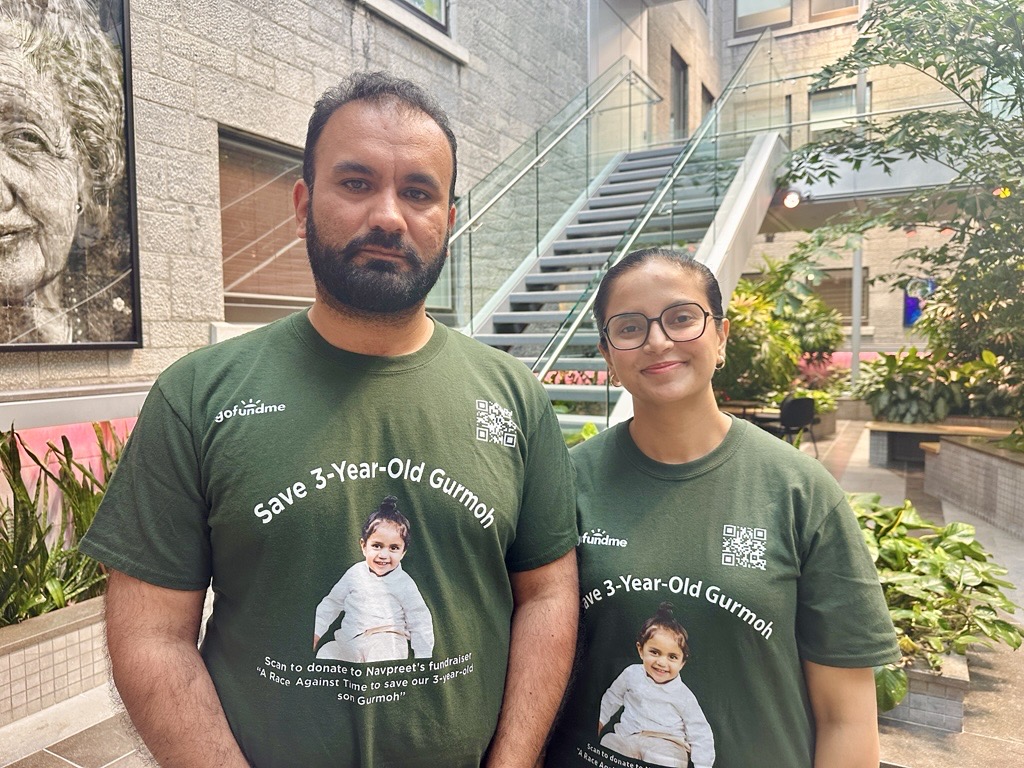
His parents, both dentists who hail from Surrey B.C., say they have raised more than $2.6 million through a GoFundMe campaign and radio-thon fundraiser drive and are travelling across Canada to raise awareness and support research. They’ve raised what is needed to fund the initial research, but say that $6 to $8 million will be needed in the end.
They toured the Montreal Neurological Institute — the Neuro — where researchers are working on potential genetic treatments.
Gurmoh’s particular case is caused by a de novo mutation that does not have an approved therapy.
In fact, he is the only child with this variation of a rare disease, SPAST c.1496 G>A (p.Arg499His), in Canada, and as such, government funding for his gene therapy is largely unavailable.
Dr. Ziv Gan-Or, director of clinical research at the Neuro, says that this new therapy is very different from “the old sense of drugs.”
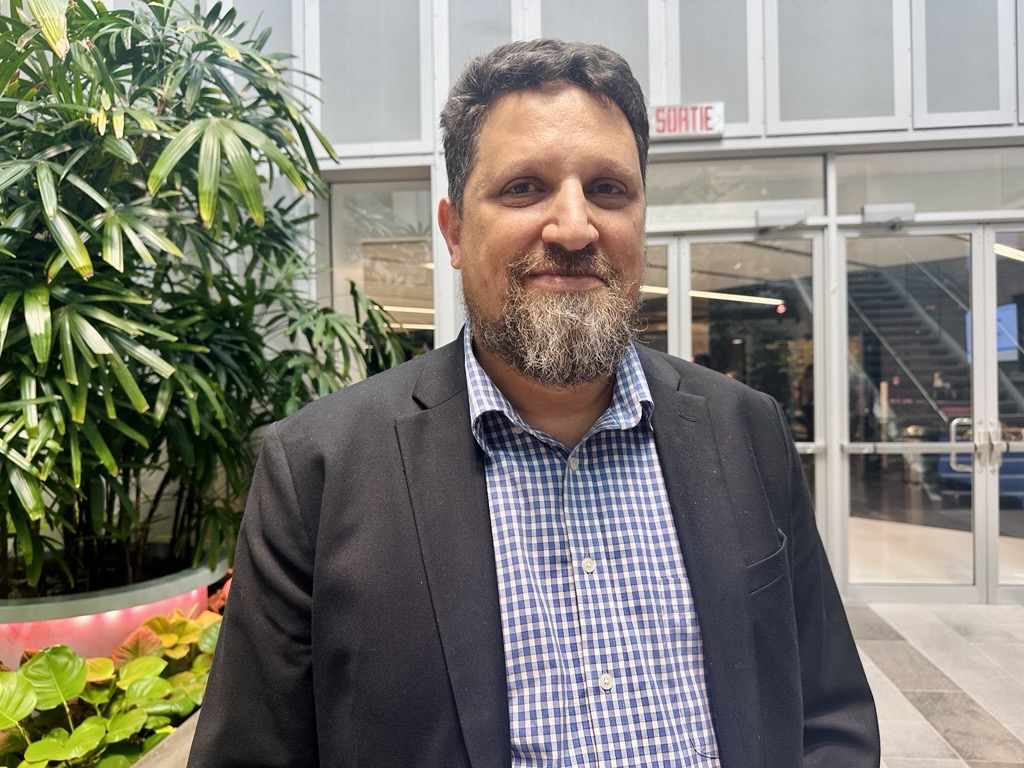
The Neuro is working with University of California Berkeley to develop the machinery that edits the DNA. Then, it will be rigorously tested at the Neuro before clinical trials, which Dr. Gan-Or has been discussing with Health Canada in hopes of avoiding delays.
“We are going to change the mutation back to normal,” he said. “This type of disease is in a very specific area of the brain, in the motor area of the brain, where we are going to deliver the treatment… either directly into the brain or into the spinal fluid.”
Navpreet Gill says this has given her family hope.
“We were left on our own that there is no hope, no answer, no single drug we can use for our child,” she said. “But this is where things become possible and you start seeing that ray of hope.”
Montreal was the family’s 10th stop since leaving Vancouver. Their next and final destination is Ottawa.
“Gurmoh’s disease is neurological and progressive and is genetic and 80 per cent of rare diseases are neurological and genetic,” said Stalinjeet. “So once they develop this therapy, they can translate the same science, same thing to multiple, 80 per cent of 3.2 million Canadians. That’s a big number.”
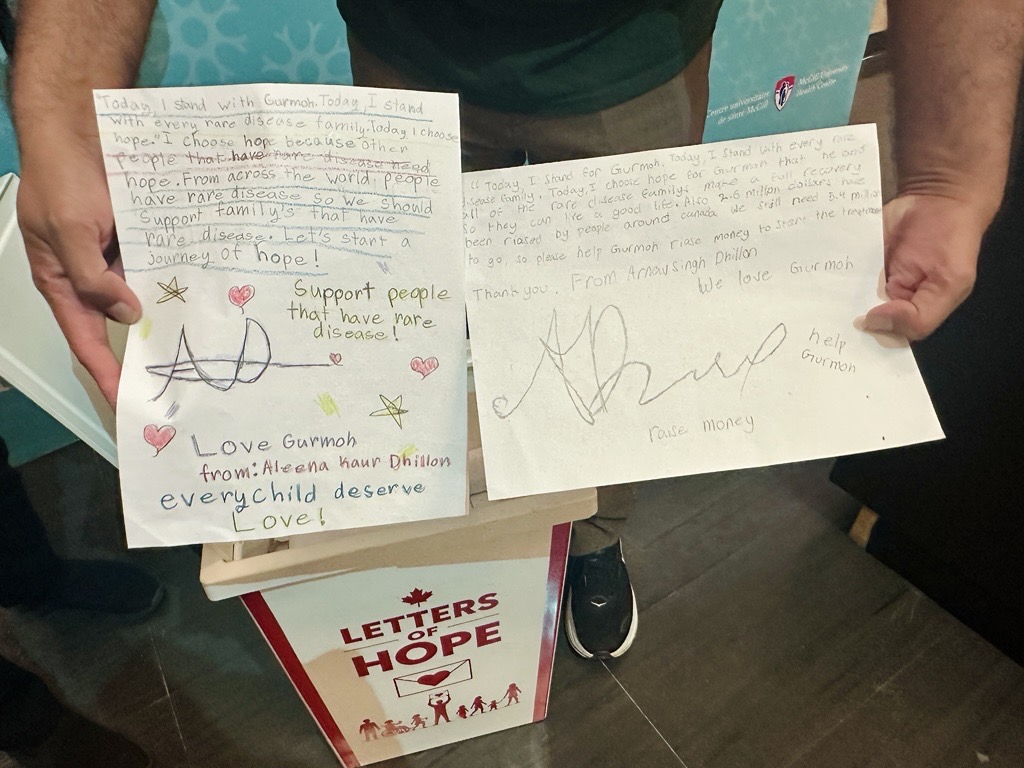
The family will present thousands of letters they collected during their journey from supporters of their cause. Stalinjeet sees the letters as “hope.”
“I think Prime Minister Mark Carney should have time to receive all these hopes and work on it because these things are a race against time. They cannot linger on,” he said. “They cannot turn your face on. “They have to be treated. They have to be listened equally as anybody else.”

Add CityNews Montreal as a trusted source on Google to see more local stories from us.
