

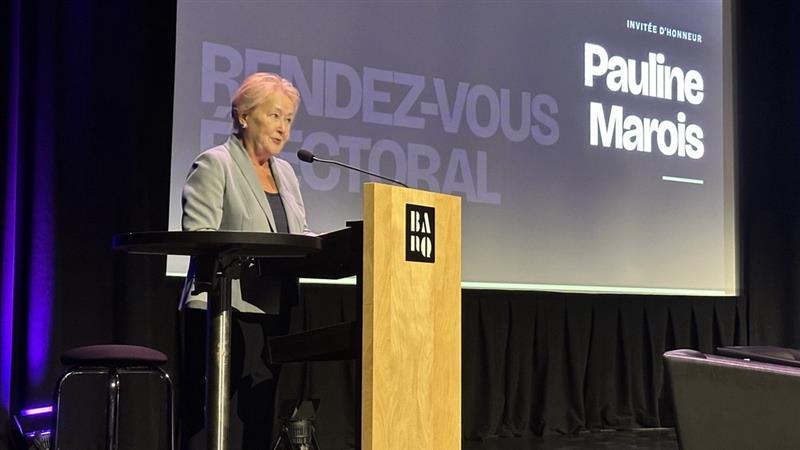

With Quebec’s provincial election just over a month away, housing affordability and non-profit housing development took centre stage at a forum in Montreal that brought together political candidates, housing experts and industry stakeholders.
The event, held Thursday afternoon at the Grande Bibliothèque, drew nearly 300 participants from across the housing sector, including developers, financing experts and non-profit housing organizations. It was hosted by columnist Josée Boileau and opened by former Quebec premier Pauline Marois.
“Behind housing, there’s families, there’s people who are living alone, there’s elderly people and everybody has to have a home where they feel happy and they can develop themselves,” said Karine Boivin Roy, the Coalition Avenir Québec candidate in Anjou-Louis-Riel.

Attendees said they were eager to hear concrete proposals from the parties on some of the sector’s most pressing issues.
“So we want to see what they have to offer and to make them think about, you know, maybe solutions that we can provide as architects and what could be the role that architect could play to help,” said Marc-André Maillé with the Association des Architectes en pratique privée du Québec.
“Three issues to keep an eye on: Housing subsidy programs, a temporary measure that’s been around for 30 years. I’m curious to hear what the parties have to say about that. The provincial government agency ‘Société d’habitation du Québec’ is a great organization, but it could use a bit of a boost. And then there’s homelessness. Where are those announcements right now?” said Jean-François Tremblay, president of Domicile Fixe.
Before hearing from the party leaders, a panel of industry experts focused on the goal at the heart of the event: increasing the share of affordable housing in Quebec to 20 per cent by 2050.
It’s a target that earned support from all four political parties represented in the debate, although Catherine Gentilcore, the Parti Québécois candidate for Terrebonne, said an interim target of 12 per cent affordable housing by 2030 would be needed before committing to the 2050 goal.

Félix Rhéaume, the Quebec Liberal Party candidate in Châteauguay, said his party is backing the 20 per cent target while also promising to accelerate housing construction.
“We announced it this week with our leader, Charles Milliard, not only the 20 percent that we want to reach by 2050, but also we committed to build 100,000 new units per year. This is a way to solve the housing crisis —it’s to build more. And in that 100,000 new units, we committed to build 40,000 affordable housing units in the next five years, because there is a housing crisis and there is an affordability crisis. And we need to tackle both crises.”
Québec solidaire candidate Andrés Fontecilla said the target is achievable if Quebec commits the resources needed.
“It’s a very realistic goal,” Fontecilla said. “As long as the Quebec government commits the resources needed to make it happen. This is our goal, and once those targets are in place, reaching it is absolutely possible.”
Boivin Roy pointed to the CAQ government’s investments in housing over the past several years.
“We’ve already done a lot of work, like I said today. You heard me say important numbers since 2018. The government has invested $11.6 billion in housing and will continue to invest in housing.”

The Conservative Party of Quebec declined the invitation to participate in the forum.
The discussion highlighted broad support for the goal of increasing affordable housing across Quebec, while revealing different approaches to how political parties would reach that target if elected.
Among the ideas discussed during the forum were increasing support for non-profit housing organizations, accelerating affordable housing development, making greater use of modular and prefabricated construction, unlocking unused public properties for housing projects and improving access to stable funding.

Participants also debated ways to streamline regulations and strengthen existing housing programs.
Add CityNews Montreal as a trusted source on Google to see more local stories from us.
