


In Quebec, more than one in five adults struggles with basic literacy: above the national average. September 8 is International Literacy Day.
“Literacy is simply lifelong learning, and there is no judgment in our safe space. We will meet you where you are, and we will evolve at your pace with open arms,” according to Julia Asselstine, Executive Director of Literacy Unlimited.
Hagop Shahbazian is a Literacy Unlimited learner; he says about his experience prior to coming to Literacy Unlimited, “I didn’t know how to read or write. I had difficulties in knowing the streets where I lived.”
More than one-in-five Quebec adults can’t read well enough to fully navigate daily life; it shapes their work, their health, their finances, and their connection to the people around them.
Asselstine says, “Twenty-two per cent of Quebecers have literacy levels below level two, so that is being able to pick out a few words in a paragraph. Of that 22 per cent, 40 per cent are high school dropouts, 20 per cent are newcomers. The rest is neurodivergency. It’s the Indigenous populations that have a hard time accessing the right education.”
“Thanks to David, I passed on December 11. My knowledge test, and I’m going to pass the next test. I’m going to get there and pass it,” said Shahbazian.
His mentor, David Winn, says, “Walking into the AGM at the end of a year to learn that he had passed his driver’s license test and was now a licensed driver, that was definitely the biggest thing.”
Asselstine shares an interesting stat: “[When] you increase literacy levels by 1 per cent. GDP goes up by 5 per cent in Canada. This is huge. This is people living the best version of themselves, and literacy really is like long learning. There’s often a huge stigma attached with the term literacy. It’s, ‘Oh, someone can’t read or write.’”
Shahbazian admits, “You have to be so like 100 per cent here to be something, and when you walk out of this place, you’re proud of yourself. You say Hagop or anyone out there, you’re proud of yourself. You come out, and you’re 100 per cent ready to go into real life.”

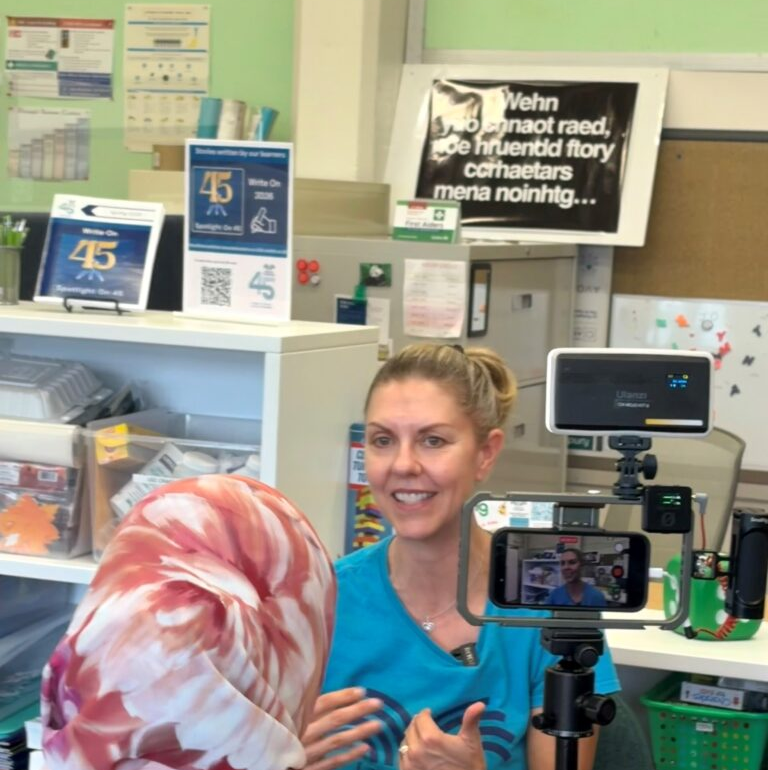
Fariha Naqvi-Mohamed interviewing Julia Asselstine (Submitted by: David Winn)
To those interested in volunteering to be a mentor, Asselstine says, “When we look at our seniors’ population especially, literacy levels really tend to drop because it’s digital; that digital literacy space is included in literacy. And it’s hard as a senior to keep up when your children have moved out, when you’ve maybe left the workforce. And then that whole AI space around being able to critically think about what I’ve seen, what I’ve viewed, what I’ve read. Does that make sense? Is it real? So there are challenges, and that’s that critical thinking space around digital literacy, and AI is a space that we’re really looking into right now and developing for our students and learners.
“You can come in. You don’t need to be a teacher as a volunteer, and we will put you through a 12-hour training session to be able to help people with low literacy.”
Head to Literacy Unlimited for more information.


Add CityNews Montreal as a trusted source on Google to see more local stories from us.
