

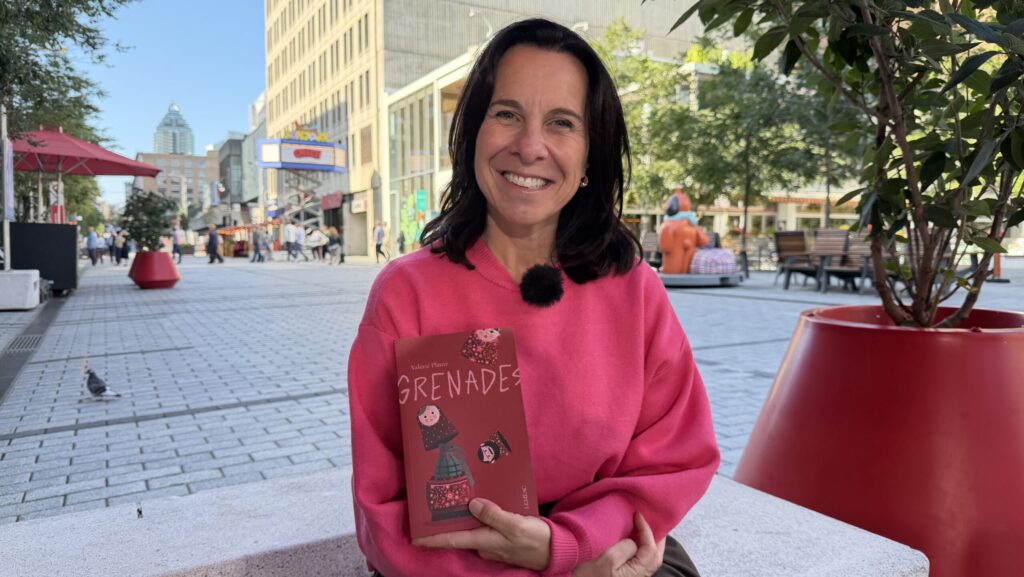

Former Montreal mayor Valérie Plante says she is not ruling out a return to politics in the future, but for now, she believes there are other ways to contribute to society and make a difference in the roles she is taking on.
Plante joined CityNews to talk about life after politics, her time leading Montreal, and what comes next.
You spent eight years as Montreal’s mayor. What has this year away from city hall taught you?
Well, it’s been a time to definitely resource myself, take time, you know, spending with the kids, with the family, just changing rhythm. Because when you look at the project that I’m presenting today, of course I’ve been busy, but after City Hall, I feel like it was just time for me to be more spontaneous and switch rhythm for sure.
You’re returning to UdeM in a role focused on democracy, citizen participation and public policy. Having been on the other side of those issues as mayor, what do you think students need to understand about governing a city today?
I thought it was a perfect opportunity for me to give back and to contribute on how we put, people that have ideas and solutions, how can we better put it together? Because public servants have solutions, politicians have solutions, researchers and people at universities have solutions. So, if I can facilitate that, I think it would be great. And I also will be participating in some research group based on the subject that you’ve just mentioned. So, this is a passion for me. Like, I think that every decision maker should base their decision on data, science. And I think it’s a great continuation of how I’ve been working as a Mayor.
You’re a TV host and with Sabras en Ville heading to different cities, talking to different communities about the biggest challenges that they face. Again, these are challenges that you’ve addressed in a very different role. You’re now behind the microphone. You’re the one asking the questions. What has that been like for you?
It’s been amazing to notice how we’re all dealing with pretty much the same challenges. I mean, like cities, homelessness, the housing crisis, the climate crisis, of course. But every city is dealing with those issues differently and there’s also similarities for sure. But I wanted to take this new journey by starting with the citizens. How they experience those challenges. What are the solutions they’re seeing and how are they contributing to that as well? So I kind of got far from all the more the decision maker. I wanted the official voices. I wanted to talk to the citizens first.
You’re also becoming a novelist with Grenades, which explores violence, immigration, sisterhood and ultimately reconstruction. What made you want to tell this story?
Yeah, I mean, I know it’s a lot. But at the same time, I feel like with the series and with this part, and even with the University of Montreal, I feel like I’m showing another part of another side of my personality and my experience, which is I’m an anthropologist. And not all people know that. So, for me, writing this book, and it also starts about characters, some people that are… How do you rebuild yourself after explosions? Internal explosion. And in some cases, explosion outside of yourself. So, I’m kind of digging into the complexity of people where for the TV show, it’s about exploring the complexity of cities.
Who do you think should read this book? Why should they read it? What will they learn?
Yeah, that’s a good question. I would say like everybody for sure. I mean, I think that people that want to… Hopefully they will relate to the human side of… Well, maybe they’ll want to read it because I wrote it, but ultimately, it’s really about when you go through difficult stuff, how do you surround yourself? So, I wanted to talk about sisterhood a lot. This is probably what looks the most like me in this book, is sisterhood. That notion of how women, we surround ourselves. And how men surround themselves by women. Because I think we… It’s a way to be… to make us better. And to rebuild ourselves after difficult times.
You’ve said politics isn’t on your radar right now. Is that a firm decision, or are you leaving the door open to a return to public life someday?
You know, I mean, I didn’t expect myself to become the mayor or to write a novel or to write a series. So, for sure now, I don’t say never because you never know. But it’s not on my radar right now because, you know, I’ve always been very clear that there’s different ways to contribute to your society, to change the world. I feel like I’m doing it in a different way, but who knows? We’ll see.
You’ve taken on several new identities… professor, TV host, author… what do you hope people discover about you that they didn’t see when you were mayor?
Something I was really attached to when I was mayor was to try to break the mold and saying, like, we can be many things. When I was mayor, I did write two graphic novels, right? Talking about the politics, my political journey. And the idea was to say you can be a great mayor dealing with a $7 billion budget every year, but you can also have a creative mind. And you can also be a feminist, you can be a mother, you can be different things. So I hope that through all those projects, people feel and see that I’m a passionate woman, someone who really believes in the common good, that is something that comes through all my projects, and that I will continue to, I’m a happy warrior, I will continue to fight for what I believe in, and I think it shows in all the projects.

Add CityNews Montreal as a trusted source on Google to see more local stories from us.
