

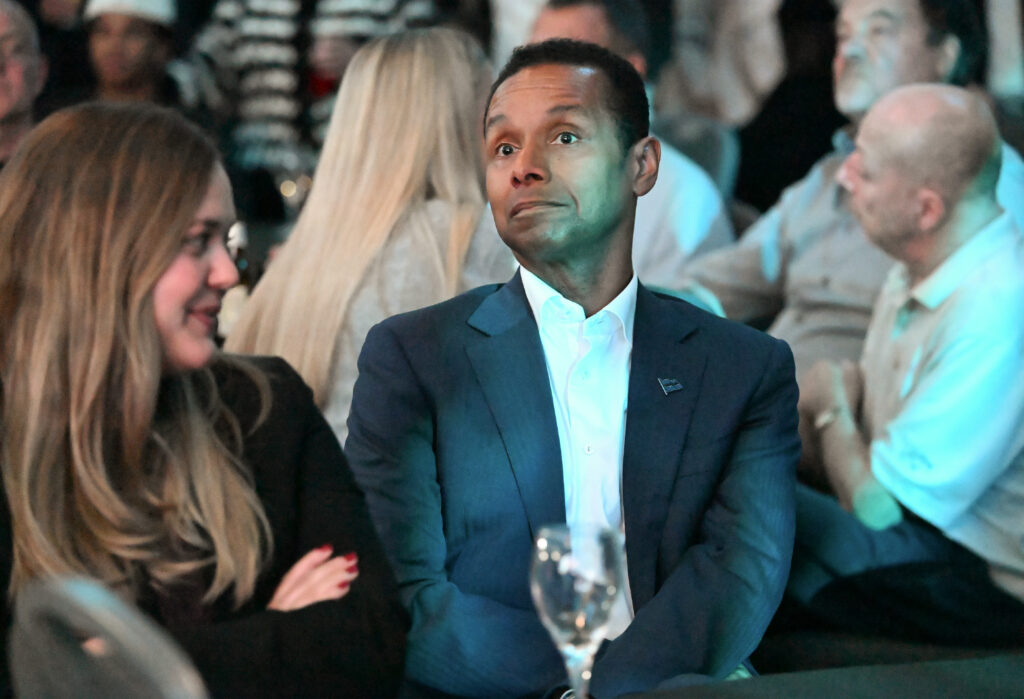

After eight years leading a majority government, it all came crumbling down Monday night for the Coalition Avenir Québec (CAQ).
Quebec voters decisively turned away from the CAQ and leader Christine Fréchette on election night as the party was projected to win no seats.
Quebecers voted in Paul St-Pierre Plamondon and the Parti Québécois (PQ), which will lead them for the next four years.
In a concession speech Monday, Fréchette said she called and congratulated St-Pierre Plamondon and offered him her collaboration for an orderly transition.
“Quebecers wanted change, and I respect their choice,” the outgoing premier said.
Fréchette was projected to lose her own seat in the riding of Trois-Rivières, an emblem of the stunning reversal of fortunes for the party that won a formidable 90-seat majority in the 2022 general election.
Addressing a room full of party supporters, she said she accepted full responsibility for the party’s loss.
“The defeat is mine, not yours; keep your head high,” she said.
Fréchette also spoke about the party’s third-way approach as being different between the Quebec Liberals’ federalist and PQ’s separatist approaches. “Quebecers don’t have to choose between pride and prosperity,” she said, adding that she will continue defending those ideals.

The CAQ’s defeat on Monday was widely predicted in voter intention surveys released in the later part of the five-week campaign, which showed the party slipping into third place behind the PQ and the Quebec Liberals — even though it appeared it would be a three-way race when the election was called.
In some polls, the CAQ’s support was less than 20 per cent, effectively erasing the gains made by the party since Fréchette came to power in April and after the campaign rollout.
In both cases, it was largely bolstered by the economic uncertainty brought on by the ongoing Canada-U.S. trade war. Fréchette herself tried to capitalize on U.S. President Donald Trump’s tariff threats, which also boosted her own popularity among Quebecers as the best leader to steer the economy.
“My opponent is Donald Trump; he is the real opponent,” said Fréchette at the campaign launch event in Quebec City. “I’m asking for a mandate to move forward through a storm.”
However, as the campaign unfolded, Fréchette was unable to shake off the CAQ’s unpopularity after two consecutive terms under then-premier François Legault.
Fréchette often found herself on the defensive as her opponents attacked her over the province’s crises in housing and homelessness, affordability and health care. Controversies surrounding claims of U.S. interference in Quebec elections and a projected cost overrun for software projects at Santé Québec threatened to upend her campaign.
Fréchette also tried to walk a fine line defending the French-language laws and courting Anglophone voters after Élections Québec announced it would only send out voter information cards in French and that it had instructed poll workers to speak to voters in French.
On the weekend before voting day, Fréchette expressed regret for not warning Quebecers about the economic consequences of the PQ’s quest for a referendum while pitching her party’s “autonomist” third-way approach.
Fréchette leaves office after one of the shortest tenures for a Quebec premier – the shortest since the 1980s – just shy of six months. She served as Quebec’s 33rd premier and the second woman to hold the office, after Pauline Marois.
Fréchette, who is from Trois-Rivières, came to power after defeating Bernard Drainville in the CAQ leadership race to succeed Legault, who stepped down in April.
Before running for the leadership, she served as minister in the Legault cabinet, holding ministries like the economy, energy and immigration. She was elected as MNA from Sanguinet, a riding on Montreal’s South Shore, in 2022. Prior to joining the CAQ, Fréchette worked as deputy chief of staff to former Parti Québécois minister Jean-François Lisée from 2012 to 2014.
Her selection as leader of the party — and therefore premier of Quebec — was the CAQ’s attempt to breathe new life into the party. Legault resigned from office following the CAQ’s consistent low approval ratings and a series of controversies.

“I congratulate Paul St-Pierre Plamondon on his victory,” Legault wrote on social media. “I sincerely hope he makes the best decisions for the future of our nation. I also congratulate the other party leaders on this process, which is essential to our democracy.
“And I have a special thought for Christine and the entire CAQ team.”
Economic scandals roiled the party, as taxpayers footed hundreds of millions of dollars in failed investments or cost overruns. A standoff with the province’s doctors over a compensation reform bill showed a rift within the cabinet at the end of 2025 with former health minister Christian Dubé seen as one of Legault’s trusted acolytes.
Many of the CAQ government’s policies also became hotly debated as the party passed several legislations using the notwithstanding clause. In some cases, like the Quebec Constitution bill or the abortion legislation, the government had to walk back after a public outcry.
Critics also denounced the French language laws, which the government claimed were to protect the decline of French in the province and in the Montreal area. The laws restricted the use of other languages while accessing government services, including by immigrants after six months after their arrival.
Religious minorities and civil rights groups condemned the secularism laws banning public officials and teachers from wearing religious symbols or clothing and prayers in public spaces. The government also tightened immigration policies, causing hundreds of temporary workers and their families to lose eligibility for permanent residency.
Add CityNews Montreal as a trusted source on Google to see more local stories from us.
