


Caregiving looks different for everyone, but the stories behind it can bring people closer together.
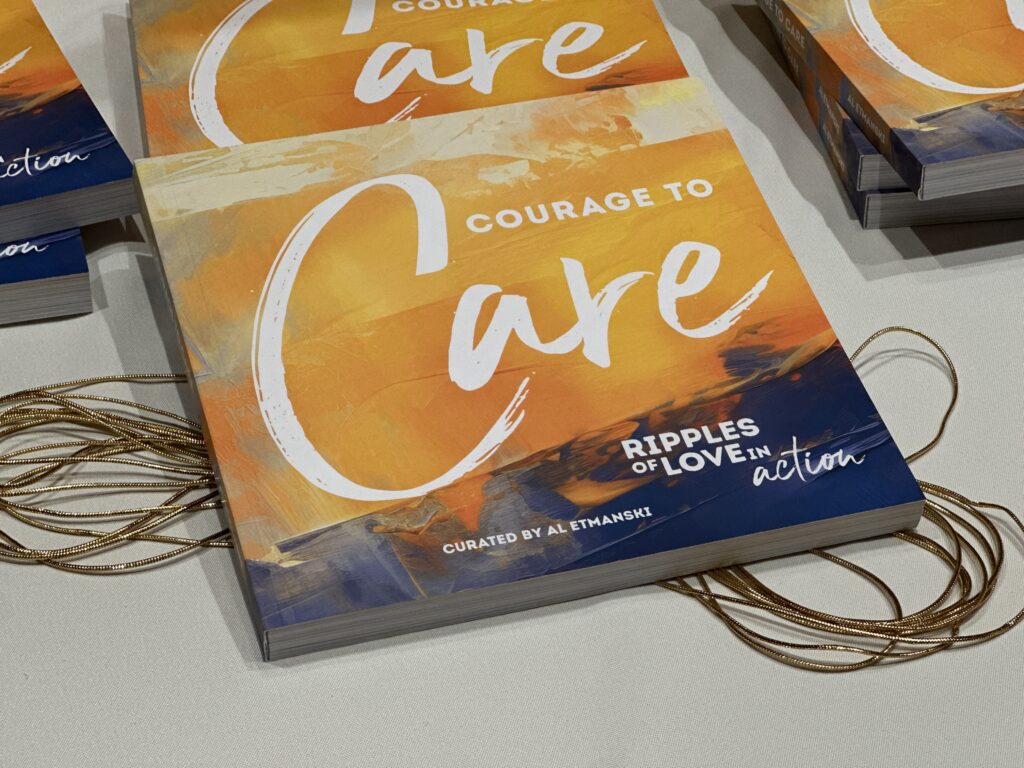
A new book, Courage to Care: Ripples of Love in Action, explores those experiences.
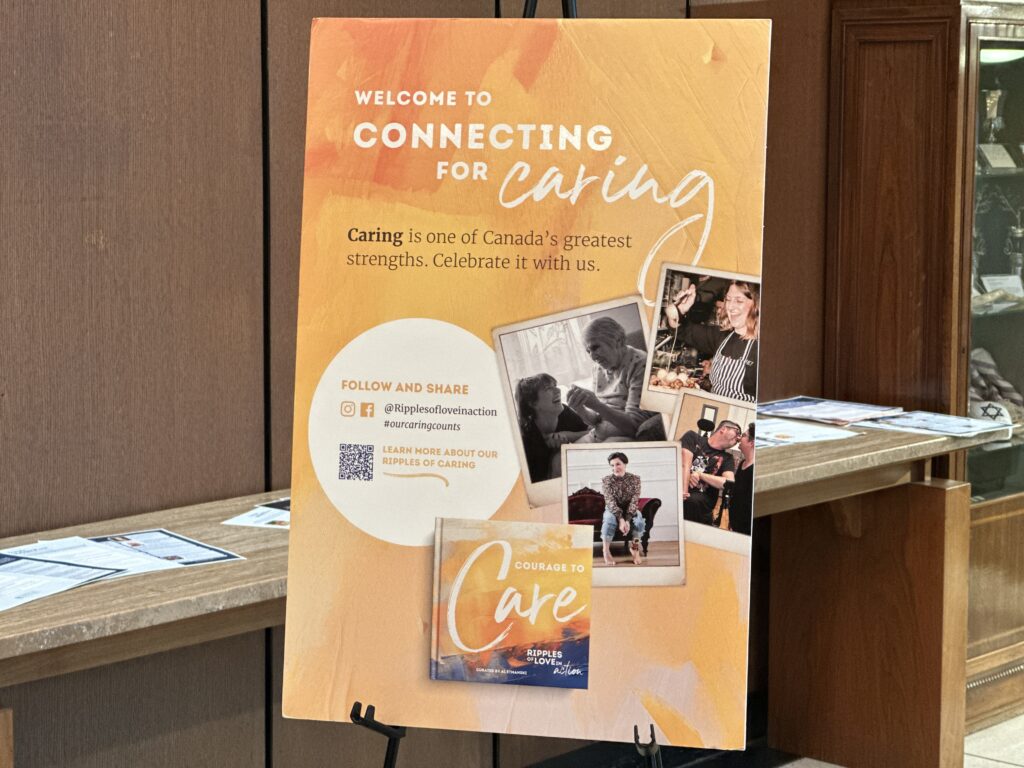
On Monday night, Montrealers gathered in Westmount for Connecting for Caring, an event featuring stories, poetry, music, artwork and conversation inspired by the book.

Curated by Al Etmanski, the books aims to recognize the often-overlooked role of caregiving in families and communities.
“The most important is to let people who are in caring relationships know they’re not alone,” Etmanski said. “To acknowledge they’re caring with beauty.”
A book inspired by personal loss
Etmanski said the project began after the death of his wife, who was active in the caregiving movement. He was initially asked to compile a collection of her writing, but decided instead to invite people across Canada to share their own perspectives on caring.

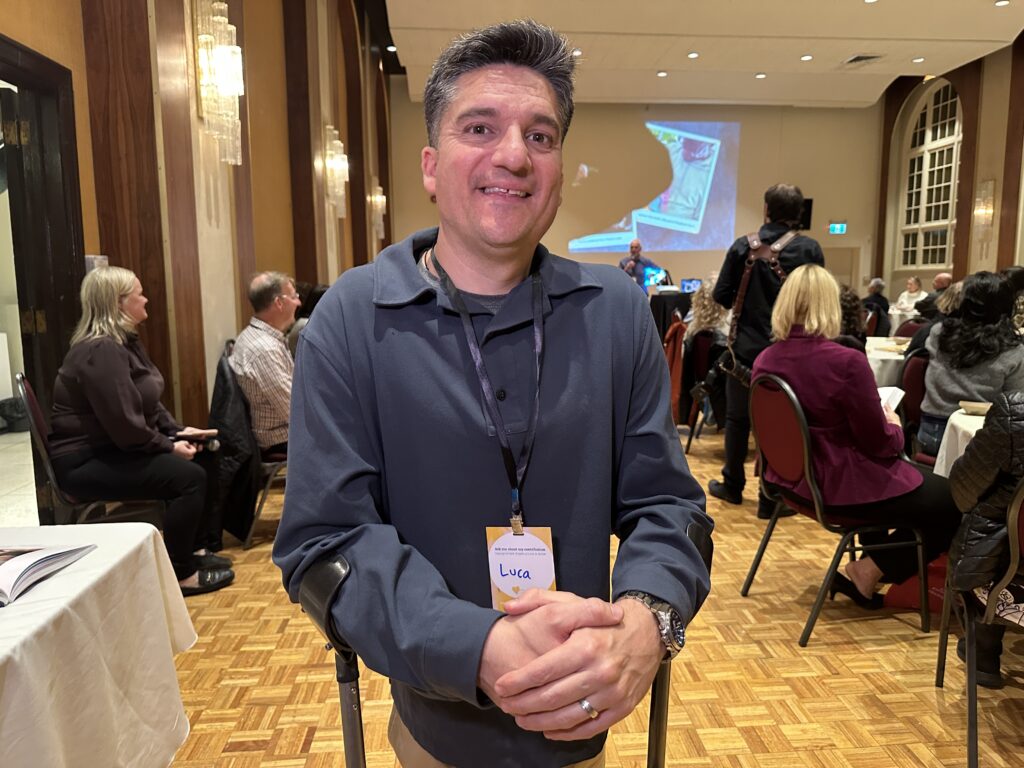
One of the first people he approached was Montreal-based dancer, choreographer and performer Luca “Lazylegz” Patuelli.
Etmanski said Patuelli offered a valuable perspective.
“It was very natural for me to contact him and ask him about caring relationships from two points of view: as a receiver of care because of his own disability, but also as a giver of care to his daughters,” Etmanski said. “For me, he was the perfect candidate for the book.”
Finding a way through fatherhood
Patuelli’s contribution, titled “Improv,” reflects on becoming a father with a disability and adapting to the challenges of caring for his child.
He said he was honoured when Etmanski approached him and saw an opportunity to share the struggles and successes of his experience as a father.
“I was at a point in my life when I felt it was important to share my life as a father with a disability, who also has a child with a disability, and the beauty of the struggles and successes from my learning experiences,” Patuelli said.
He hopes his story will encourage others.
“If my story can help inspire any other parent with a disability to understand that they can conquer their challenges and learn to adapt and do things their own way, then that’s what I hope to be able to accomplish,” Patuelli said.
Care takes many forms
Patuelli’s story is one of more than 160 contributions in the book, which includes written reflections, poems, photographs, paintings, illustrations, song lyrics and recipes.
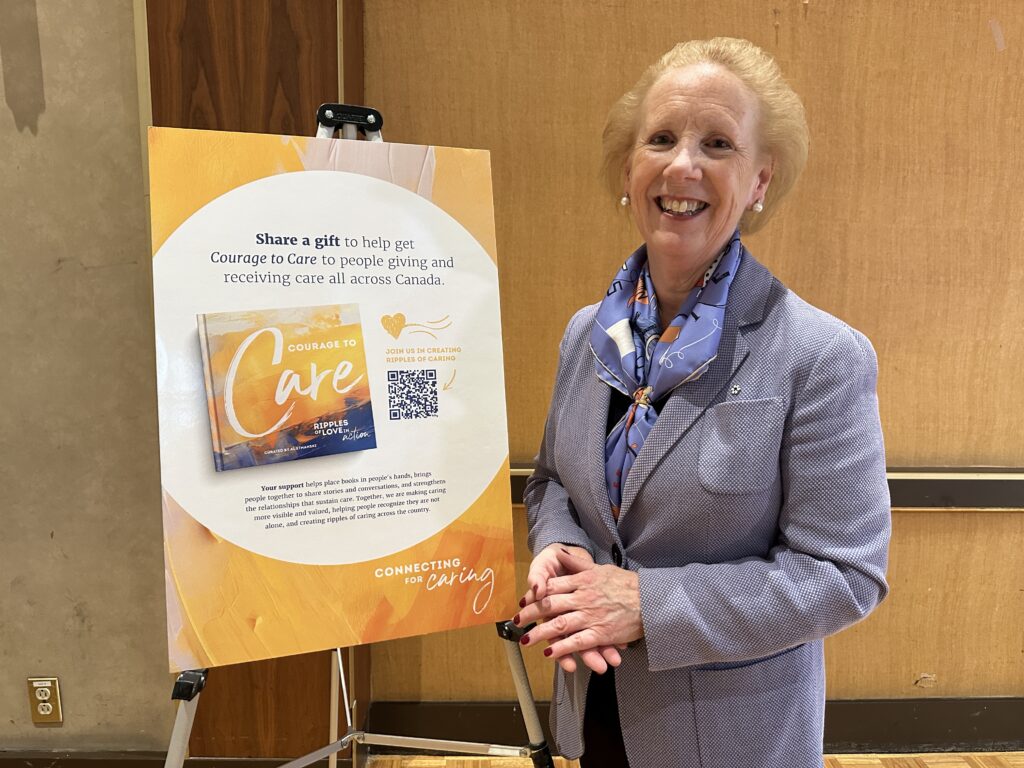
Contributor Hilary Pearson wrote about the influence of service across generations of her family. Her piece, “A Family Legacy of Caring,” explores how public service, volunteering and philanthropy shaped her family’s approach to helping others.
“It’s important to share a family story because it shows others that there is a generational influence, that grandparents and parents can influence children and that service is something that matters and it has a lot of meaning,” Pearson said.
When caring cannot fix everything
Other contributions explore the limits of what care can accomplish, particularly when someone is experiencing mental health difficulties.
Montreal contributor Fabrice Vil draws on his experience of a mental health crisis in his piece, “Caring Doesn’t Cure.”
“I did have a mental health crisis a couple of years ago, which led me to noticing how much caring doesn’t necessarily solve something, but it helps healing to a certain extent,” Vil said.
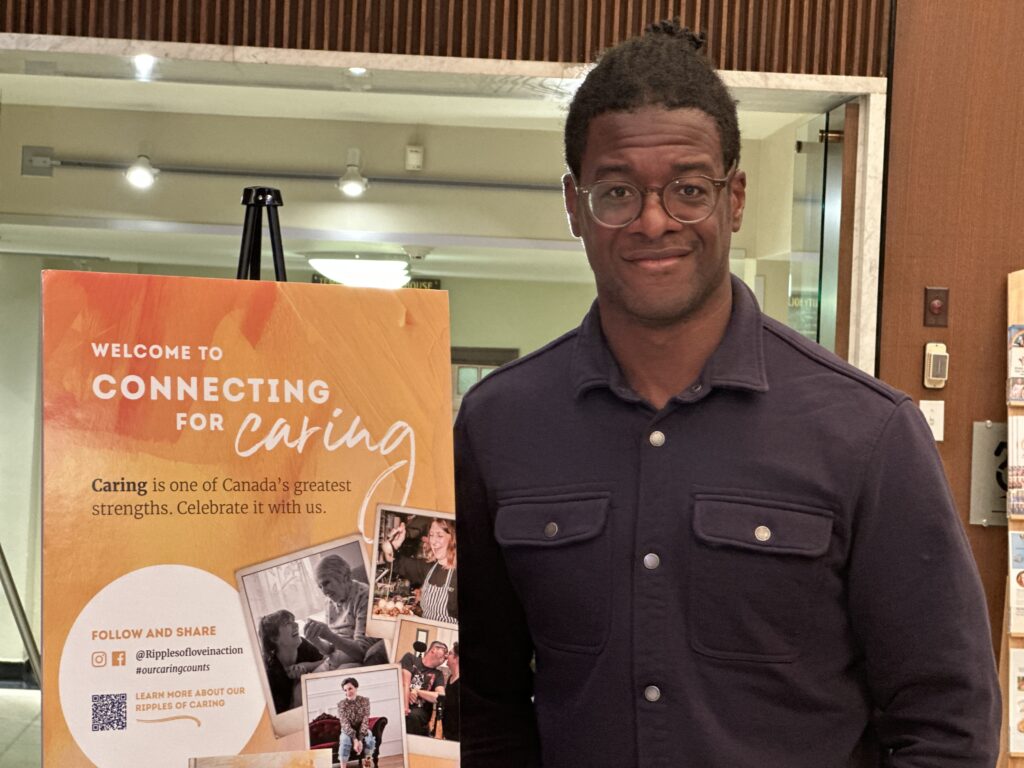
His contribution also emphasizes the importance of caring for oneself, both physically and mentally.
“I believe that every human being cares for someone, for something, but we don’t take the time and spend the time to talk about it together,” Vil said.

Building a wider conversation about care
Beyond sharing personal experiences, the project aims to encourage greater recognition and support for caregiving across Canada.
The book’s publisher operates as a non-profit social enterprise. Etmanski said additional funds raised are used to purchase more copies for caregivers and their organizations.
For him, the goal extends beyond the book itself. He hopes the stories will encourage people to recognize the importance of care and work together to strengthen their communities.
“We want to remind people that we are a powerful force so we can do lots together to improve our capacity as citizens to take care of each other,” Etmanski said.

Add CityNews Montreal as a trusted source on Google to see more local stories from us.
