

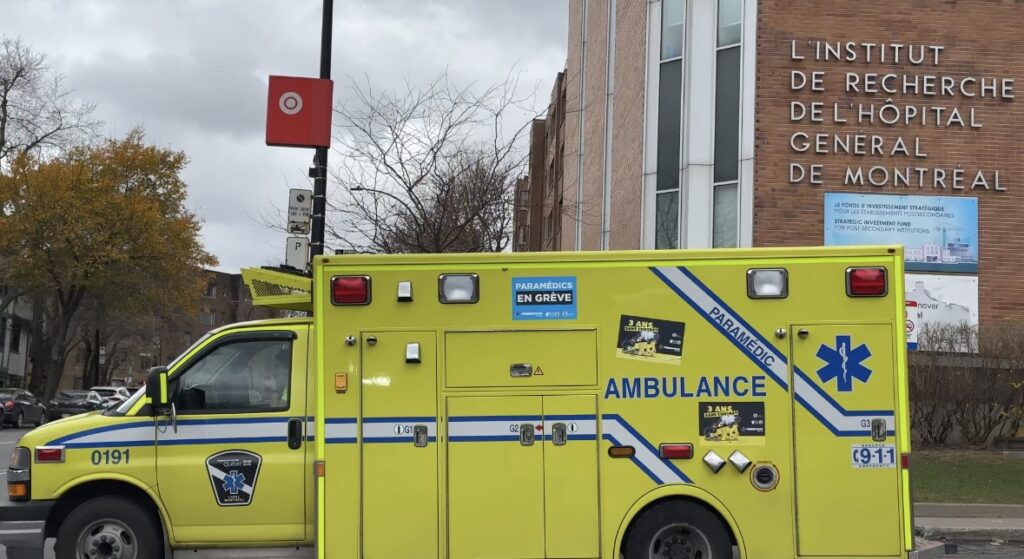

Overcrowding in emergency rooms in Montreal continued into Monday after some registered 200 per cent occupancy rates over the weekend amid an early start to the flu season.
Just before noon Monday, the occupancy rates in stretchers were the highest at the Lakeshore Hospital with 226 per cent followed by the Jewish-General Hospital, where the rate was at 219 per cent and the Montreal Children’s Hospital was at 217 per cent.
Other major hospitals were also seeing more than double the patients than their capacity, including the MUHC and Royal Victoria Hospital which were at 209 per cent, Lachine Hospital at 207 per cent and Lasalle Hospital was at 193 per cent.
Dozens of patients across Montreal ERs were also waiting for over 48 hours: 35 at Lakeshore Hospital and 29 at Royal Vic. More than 200 were waiting for over 24 hours.
Across the province, patients waited an average of 18 hours and 40 minutes on a stretcher Sunday. Nearly 800 patients spent more than a day and 370 spent more than two days on a stretcher.
Bianca Ledoux-Cancilla, a spokesperson for MUHC, which has seen an occupancy rate of over 200 per cent since the weekend, said the overcrowding in ER departments was adding pressure on the hospital staff and capacity.
“The situation at the Montreal General Hospital remains particularly challenging and is being closely monitored, notably due to high demand for surgical services,” Ledoux-Cancilla said.
She added that other surgical departments in the city were taking on transfers destined to go to the General Hospital.
Montrealers told CityNews that they were all too familiar with long delays while accessing health-care services.
Maxime Leblanc says he once waited 25 hours at the ER after cutting his arm.
“It’s a very long time, especially when you can see the bone in the wound,” said Leblanc. “You think, ‘oh my God, what’s going to happen?’ 25 hours and on top of that, there were no benches to rest on.”
“Sometimes, you can’t wait, for example, when I had dislocated my finger, I can’t sleep while it’s dislocated because it’s gonna hurt me the whole time,” Abdul Rahman. “So, emergency rooms should become better and faster.”
The delays weren’t limited to emergency care. Nathalie Knot says she had been waiting months for surgery after dislocating her tailbone only to have her scheduled operation cancelled at the last minute.
“I was told to show up at 11 a.m.,” Knot said. “My appointment was for 2 p.m. this afternoon. I arrive and they tell me it’s been cancelled.”
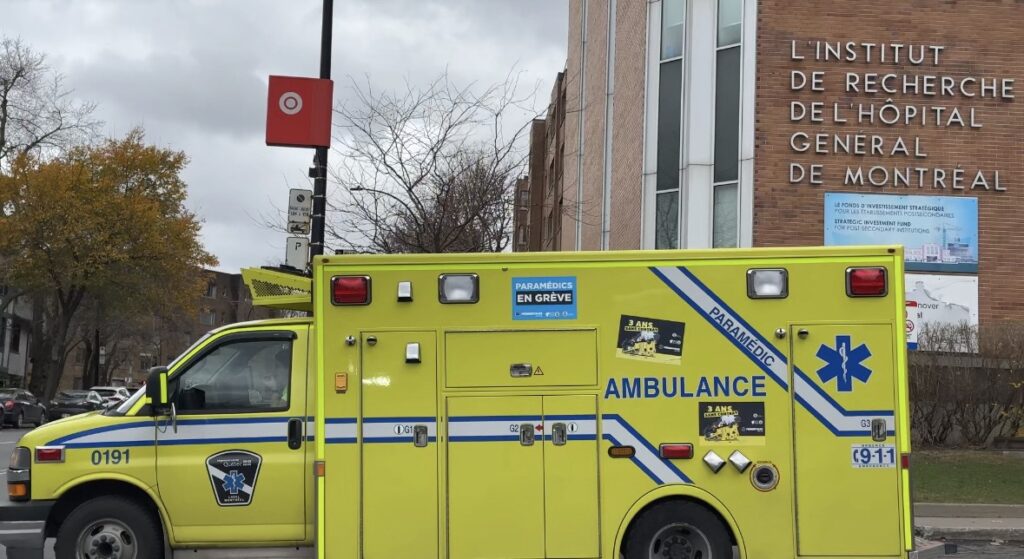
Over the weekend, MUHC said high volume of patients is reportedly due to several factors, including an increase in consultations, more complex patient needs, particularly among the elderly, and a limited number of hospital beds.
The MUHC also reported an increase in respiratory viruses, including influenza, as well as an ongoing high volume of trauma cases.
Lorne Schweitzer, an infectious diseases physician at MUHC, says the flu season arriving about four weeks early was partially to blame for the overcrowding.
“We know that about (7.7 per cent) of our tests are positive, which is quite abnormal for this time of year,” Schweitzer said. “And there was a sudden surge of patients all at once.”
According to Institut national de santé publique du Québec (INSPQ) data, the flu positivity rate (Influenza Type-A virus) went up to 7.5 per cent between Oct. 25 and 31 compared to 4.9 per cent the week before. COVID-19 rates jumped to 9.4 per cent during the same period.
Schweitzer says unpredictable events like an early start to the flu season can have a cascading effect on the province’s “chronically overburdened” health-care system.
“When you add a lot of patients, particularly older patients, we know that patients over 65 are the people at greatest risk of needing hospitalization from flu on an already overstretched system, you add a lot of burden onto that system and things spill over,” he says.
Montreal-based cardiologist and epidemiologist Christopher Labos says a shortage of hospital beds and primary care facilities were causing more patients to be treated in ERs.
“There are people in the emergency room that should be moved up to the medical floors or the surgical floors to get their treatment,” Labos said.
“If there’s no hospital beds available for them, they stay in the emergency room. That puts more workload on the nurses. That makes it harder to actually manage patients in the emergency room, which is not designed for long-term management.”
He says while overcrowding has become common, the high levels seen in recent days should serve as a wake up call.
“One hopes that having reached this symbolic threshold of 200 per cent capacity will prompt people to realize that we’ll need a massive reinvestment in the system if we’re going to have any type of functioning or efficient healthcare system,” he added.
Schweitzer echoed Labos’ call for investment into health-care services to avoid repeated overcrowding and build capacity.
“Both access to primary care for people in the community and being able to help people get out of the hospital when they no longer need to be in acute care hospital, that would lead to us having more capacity to absorb when we have high demand in periods of seasonal respiratory viruses,” he said.

Health officials urge the public to consider alternatives to emergency departments whenever appropriate so that the specialized hospital services and resources can be focused on the patients who need it the most.
The MUHC says several health-care alternatives are available, including Info-Santé 811, pharmacists, family doctors or clinics, and the primary care access point, commonly known as GAP.
However, one Montrealer told CityNews that it is not easy to know when people should go to the ER.
“It’s really hard for us to determine whether we should go to the ER or stay home because we just want to make sure that we’re healthy but it’s really difficult to know when you just have some mild symptoms but that could actually be a problem for your health,” said Vincent Lachance.
Doctors say while knowing when to go to the ER can be difficult, there are some warning signs that shouldn’t be ignored. Severe difficulty breathing, persistent high fevers, or confusion and falls in older adults are all reasons to seek immediate medical attention.
“In many situations, it really comes down to a judgment call and the old adage holds true,” Labos said. “Sometimes it is better to be safe than sorry.”
Add CityNews Montreal as a trusted source on Google to see more local stories from us.
