

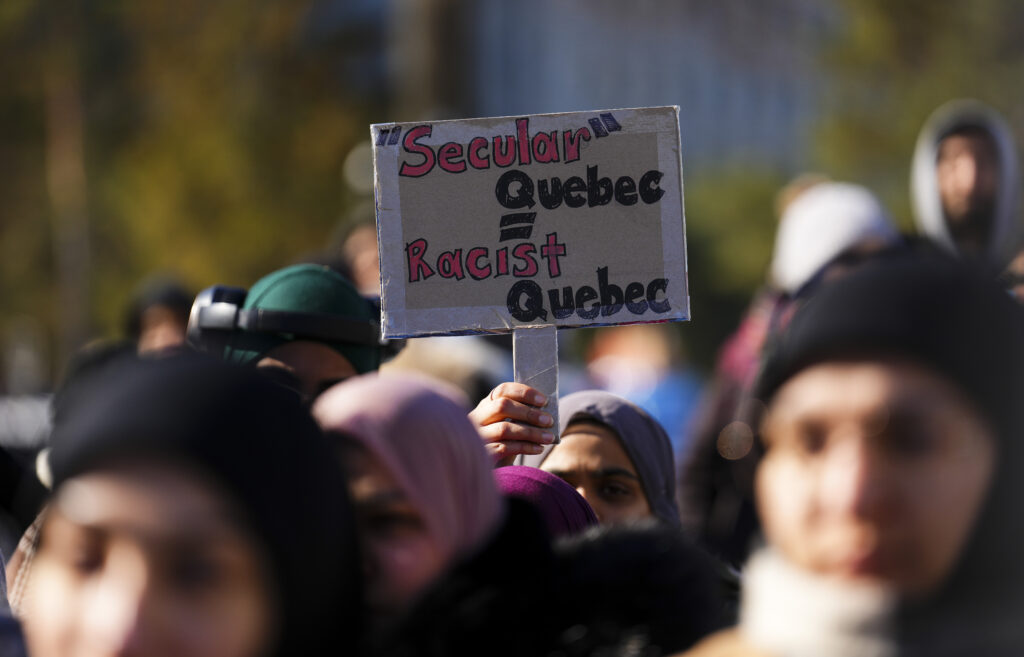

On Friday, the majority of the Supreme Court of Canada ruled that Quebec’s Bill 21 violates fundamental rights and freedoms. But that the law remains in effect because the Quebec government invoked the notwithstanding clause.
Alexandra Belley McKinnon is a lawyer representing Coalition Inclusion Quebec, one of the groups who challenged the legislation. She joined CityNews to discuss the decision.
What exactly did the Supreme Court decide today, and what does this ruling mean for the people directly affected by Bill 21?
First of all, what the Supreme Court decided is that Bill 21 remains valid. The court also said that the use of the notwithstanding clause was valid. All judges, that being said, considered and acknowledged that the law has serious, deleterious, and significant effects on the people that are subject to it. And you’re asking about the impact that this law has on the people subject to the legislation. Most directly affected are obviously Muslim women or anybody that holds a position in a public institution – if that person wants to get a promotion or transfer – that are not allowed to do so unless they accept to remove their religious symbols. The bottom line is that nothing essentially changes. The law stays in place. And if a person wants to work in Quebec’s public institutions, they have to remove their religious symbols or simply choose another job.
Bill 21 remains in effect because of the notwithstanding clause. Is there any way this decision can be challenged further?
In terms of legal recourses, that’s it. There’s no more that can be done. The Supreme Court is the highest court in Canada. However, what the decision reaffirms is that if society, if people disagree with the contents of legislation or with the use of the notwithstanding clause, it is up to them to express themselves, for example, in an election and to have their voices heard through that channel.
The notwithstanding clause must be renewed every five years. What does that mean?
That means in practice that every five years the government in place needs to introduce a bill asking for the renewal of the notwithstanding clause for a further five years and the bill is submitted to a vote just like any other bill and the MPs vote on it. That’s what will happen, I believe, in 2029 because the most recent renewal occurred in 2024.


Add CityNews Montreal as a trusted source on Google to see more local stories from us.
