


Quebec’s new minority Parti Québécois government is promising to work with the province’s English-speaking community, but anglophone organizations and residents say they will be watching closely to see how their rights and priorities are addressed.
In his election victory speech, premier-designate Paul St-Pierre Plamondon said his government would represent all Quebecers and called for cooperation between the province’s linguistic communities.
“I just want to let you know very clearly that I’ll be the premier of everyone in Quebec. I’ve said it earlier in this campaign, but we’re all in the same boat and we share the same future. We have the same interests and we have before us many challenges and problems that we will solve together, so I’m looking forward to work with you,” said St-Pierre Plamondon.
The PQ won a minority government in Monday’s provincial election, leaving the party to govern without a majority of seats in the National Assembly.
For some English-speaking Quebecers, the minority result could provide an opportunity for greater co-operation between the government and the anglophone community.
“I think we’re lucky to have had the outcome we have had because there’s going to have to be cooperation,” said Anne, a Montreal-area resident.
Other anglophones said they hope the new government focuses on the needs of all Quebecers.
“I hope they perform well because we’re not interested in separation,” said Alice, a Quebec resident.
“I’m lucky enough to be born early enough that I can still remain getting services in English,” said Clinton, another resident.
“I think it’s a real delicate balance to protect language rights without trampling on other people’s languages. So God willing, there’ll be some intelligence behind the governing,” said Anne.
English-speaking organizations are now turning their attention to what a PQ government could mean for language and education policies.
Sylvia Martin-Laforge, director general of TALQ, said access to English-language health and education services remains a key concern.
“The impact on access to services in English, in health and in education: the previous government has really given English-speaking elementary and secondary institutions a hard time with Bill 40. And so that would be something to reconsider, the challenge to Bill 40,” said Martin-Laforge.
Andrew Caddell, president of the Task Force on Linguistic Policy, said further changes to Quebec’s language laws could have broader implications for both anglophones and people from other linguistic backgrounds.
“If they harden Bill 96, for example, applying Bill 101 to Cégeps, it won’t be just unfair to the English-speaking community because it will diminish their schools. It will be unfair to people from other backgrounds and children who want to become bilingual. They’re not going to lose their French. They just want to become bilingual, so that they can do well in society,” said Caddell.
Access to electoral information in English is another issue the anglophone community wants the new government to address.
TALQ says voter reminder cards sent ahead of the election were provided only in French, with a QR code directing voters to English information.
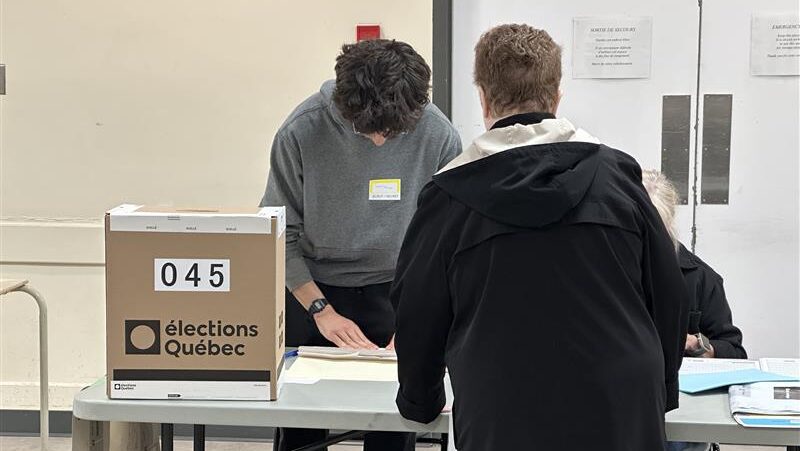
On Monday, Quebec’s Court of Appeal denied the provincial government’s request to appeal a previous ruling ordering Élections Québec to provide bilingual voter reminder cards ahead of the general election.
Martin-Laforge said St-Pierre Plamondon had previously questioned the validity of the challenge involving voter registration and expressed support for English-speaking Quebecers receiving bilingual information.
“During the campaign, he questioned the validity of the challenge on voter registration, saying that he felt it was a democratic right for English-speaking Quebecers to get bilingual information. So in our press release last night, we asked him to consider to change the rules on the Directeur général des élections du Québec and what has to be happening for English voters,” said Martin-Laforge.

Caddell said the new government should make an effort to better understand Quebec’s English-speaking community.
“We’re all bilingual. We’re all Quebecers. My roots here go back to 1640. And so do so many of the people in the 1.6 million Anglo-Quebec community. And you can see last night that we gave a mandate to a lot of members of the National Assembly that were not expected to be elected. So I think he has to sit down with us and understand our community better,” said Caddell.
With the PQ now set to govern as a minority, anglophone groups say they will be looking for concrete action on language rights, access to services and education as the new government begins its mandate.

Add CityNews Montreal as a trusted source on Google to see more local stories from us.
