

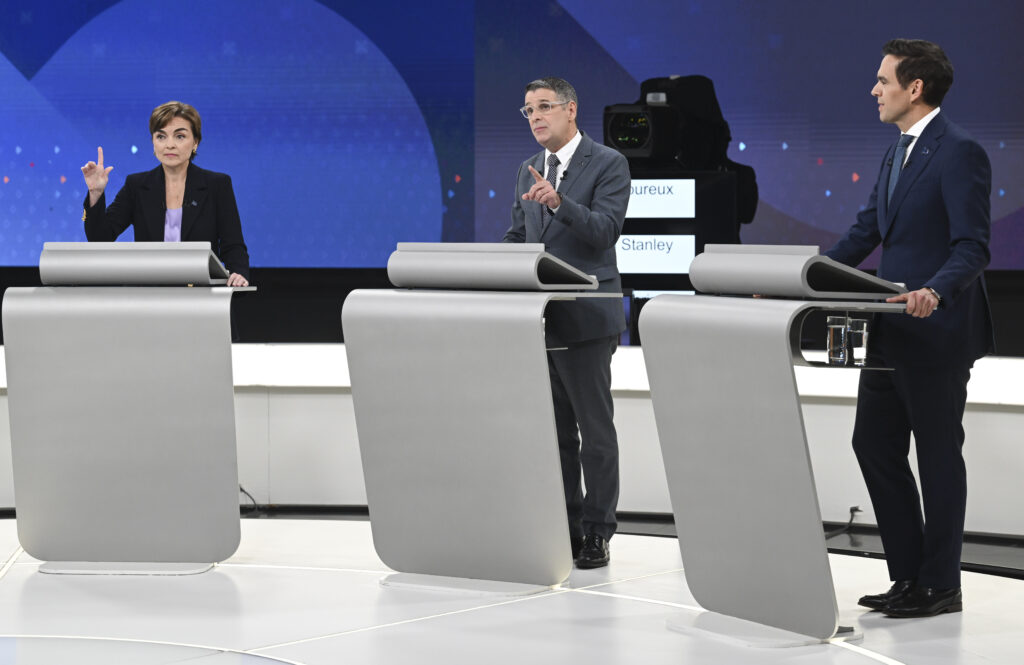

The Coalition Avenir Québec’s record on health care over the last eight years was under fire in the third and final debate of the Quebec provincial election campaign on Wednesday evening.
The party leaders accused the CAQ, now led by Christine Fréchette, of repeatedly breaking their previous campaign promises on health care, and replicating those same promises this time around.
Quebec Liberal Leader Charles Milliard led that charge, saying Quebecers felt “betrayed” by the CAQ for failing to decrease emergency room wait times and failing to give all Quebecers access to a family doctor. Milliard said, if elected, the Liberals would create a telehealth platform so people can see a health-care professional without an appointment.
The PQ’s Paul St-Pierre Plamondon continued Milliard’s offensive, saying the CAQ’s repetition of those failed promises was “disrespectful to people’s intelligence.” The Parti Québécois is arguing for more government-run CLSCs for minor emergencies to take the stress off emergency rooms and cut surgical wait times.
Quebec Conservative Party Leader Éric Duhaime agreed the need for more family doctors and the importance of decreasing hospital wait times comes up every election period. “We’re repeating ourselves,” he said. He took the attack on the CAQ’s record even further, arguing the broken promises on health care have been ongoing for decades, pointing the finger at previous PQ and Liberal governments.
Duhaime is pushing a “mixed practice” public-private model. He says some of the best health systems around the world — citing countries like France or Germany — are mixed. He also spoke about making more room for the private sector in his opening statement.

Fréchette acknowledged there “is still a lot of work to do,” but said her party had made improvements, including in increasing the number of surgeries performed and signing up hundreds of thousands of Quebecers for groups of family doctors. She said she would be open to a “mixed practice” model. Patients waiting too long for surgeries — nine months — would be moved to the private side of the system at no cost to them, she pledged.
Québec solidaire co-spokesperson Ruba Ghazal strongly opposed expanding to a mixed model. “Where are we finding these doctors for the private? From the public,” she said, arguing the model would necessarily hurt the public system. “We are robbing Peter to pay Paul.”
Still on health, the PQ’s desire to abolish Santé Québec provoked criticism from all four other leaders, as it did during a debate last week.

The Radio-Canada debate hosted by moderator Patrice Roy, happening 12 days away from the election, was the last opportunity for the leaders to go toe-to-toe all on the same stage after taking part in back-to-back debates last week. All three debates have been in French; there was no English debate this year.
Quebec in U.S. trade war
Fréchette again faced criticism from all sides regarding Quebec’s role in the tariff war with U.S. President Donald Trump.
Duhaime accused Fréchette of “sitting by” while the trade war got worse, arguing she did little to put the interests of Quebecers first — in sharp contrast with Ontario.
St-Pierre Plamondon said the CAQ’s desire to avoid dollar-for-dollar retaliatory tariffs — and Ottawa doing “the exact opposite” — was a sign of Quebec’s inefficiency at the bargaining table.
In her defence, Fréchette argued the job losses in Quebec are not a “bloodbath.”
“We didn’t meet with the same business owners,” Milliard retorted.
Quebec independence
As was the case in last week’s debate, the promise or threat of a Quebec referendum led to heated exchanges between the leaders.
St-Pierre Plamondon, whose Parti Québécois has long been the front-runner even before the campaign began, reiterated that a winning PQ party would hold a referendum in its first mandate. He urged Quebecers not to be fearful about that prospect.
“We shouldn’t be afraid of democracy,” he said. “Jacques Parizeau used to say: ‘Don’t be afraid of your democracy, of going to the polls, of reflecting on our future.’
“I think these are fundamental messages, the liberty of a people and democracy.”
Duhaime said St-Pierre Plamondon should listen to the 70 per cent of Quebecers who don’t want a referendum.
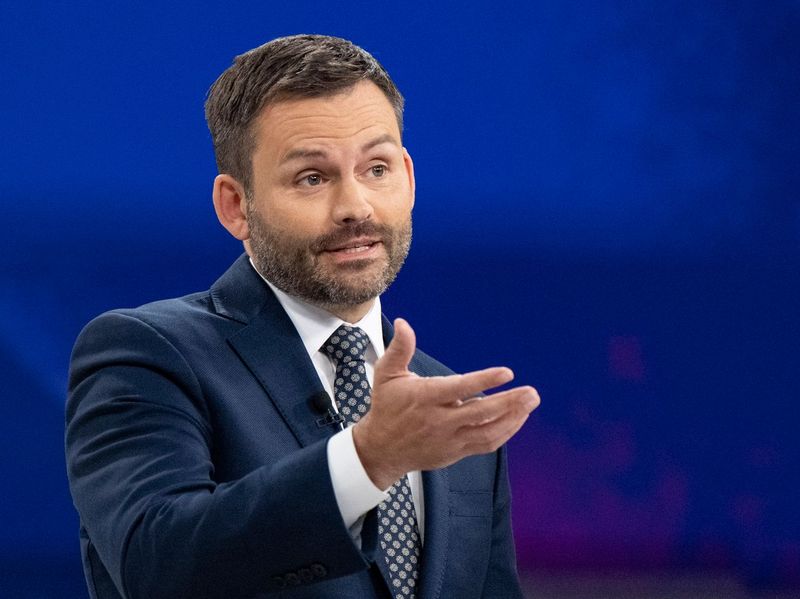
Earlier this summer, St-Pierre Plamondon said the PQ would only hold a referendum on Quebec independence once U.S. President Donald Trump leaves office.
At Wednesday’s debate, the Quebec Liberal leader argued delaying the referendum was a clear sign St-Pierre Plamondon thought the vote would fail.
St-Pierre Plamondon refuted Milliard’s claim, saying a political climate dominated by Trump was not fruitful for thinking about one’s future. “The right time to become a country will happen,” the PQ leader said.
Milliard described next month’s vote as “an election on a referendum.”
If the Parti Québécois wins the election, Duhaime said he is prepared to “collaborate on everything, except a referendum.”
‘Two things going wrong in Quebec’
On immigration, Fréchette was again the focal point of attacks, notably from Milliard.

The leader of the Quebec Liberals accused the CAQ of confusing Quebecers by shuttering, then reopening, the Quebec Experience Program (PEQ).
“There are two things going wrong in Quebec: the economy and immigration,” Milliard said. “And you have been the minister responsible for both.”
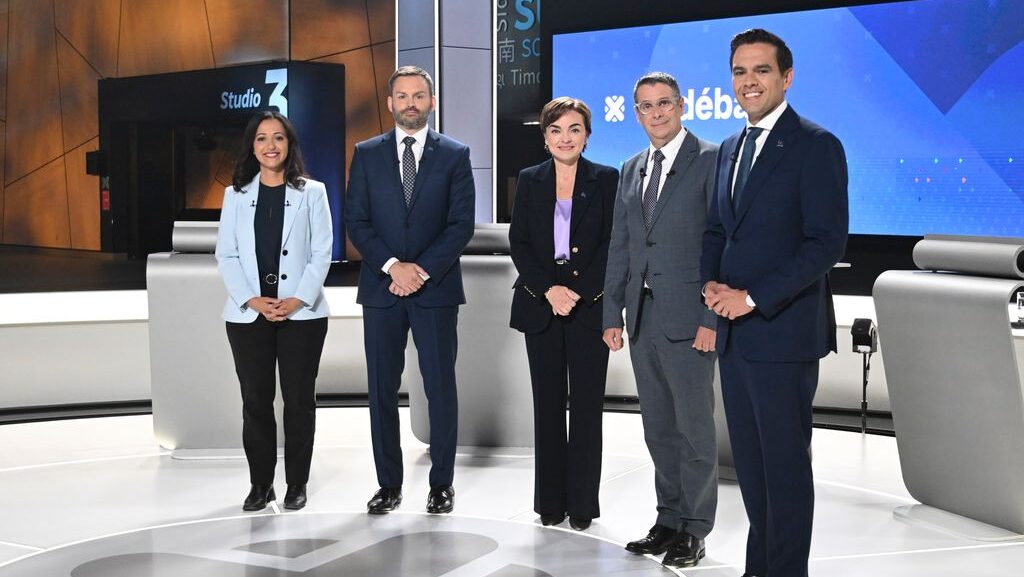
The leaders were greeted by a cacophony of supporters, protesters and ambulance sirens outside the Radio-Canada building in Montreal. As they got off their campaign buses, they met their respective supporters.
Ghazal also went down the line and shook hands with various protesters. Among them were unionized workers with the CSN, striking paramedics, environmental groups and pro-Palestinian supporters who waved flags, held up signs and chanted for their causes.
Quebec voters go to the polls Oct. 5.
–With files from The Canadian Press

Add CityNews Montreal as a trusted source on Google to see more local stories from us.
