

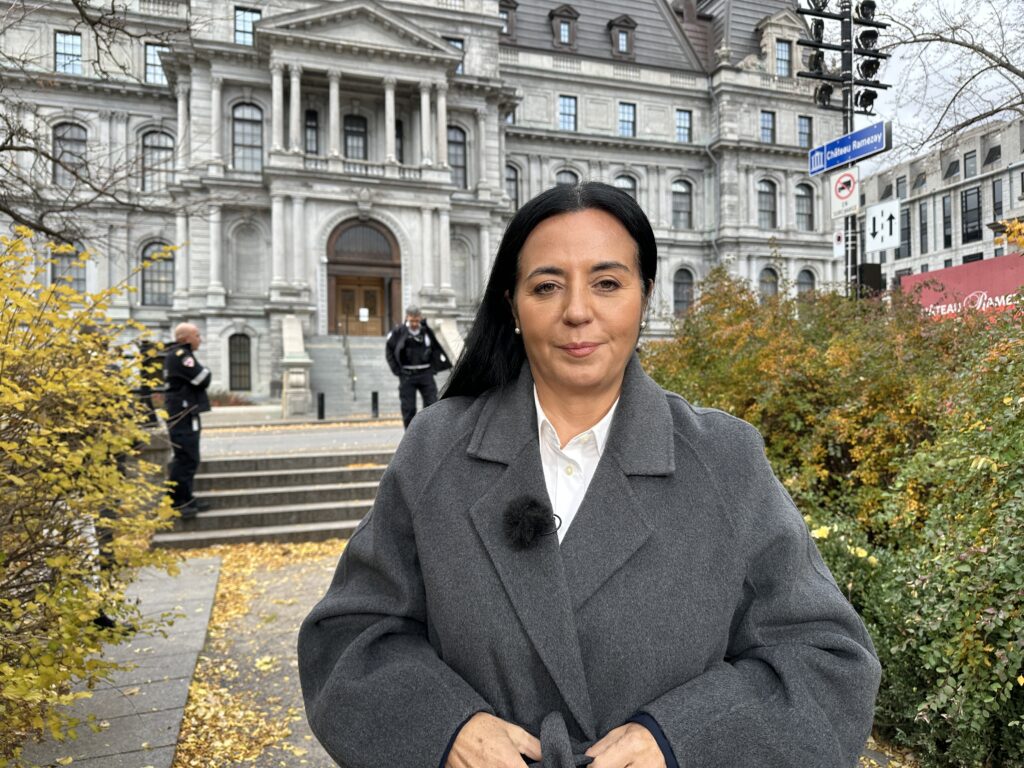

It’s been nearly a year since Soraya Martinez Ferrada was elected as Montreal’s mayor.
She joined CityNews to talk about key issues facing Montrealers from police allegations to homelessness, transportation and to reflect on her first year at the helm and what’s ahead for the city.
At your 100-day mark, you gave yourself an eight out of 10. Now, a year into your mandate, what grade would you give yourself?
Well, I said seven yesterday. I said eight because, at the time, after 100 days, we had accomplished almost everything on our list. Of course, one year into the job, I don’t pretend to have accomplished everything. And I know that our citizens in Montreal have always been very, very demanding. So I think it’s seven. It’s actually a pretty good number.
Allegations involving officers at stations 21 and 39 have raised questions about police conduct and oversight. Your party rejected a motion to have police Chief Fady Dagher appear before city council within seven days. What do you say to Montrealers who feel accountability is lacking, and do you still have confidence in his leadership?
I absolutely do, because we have somebody who wants to change the culture inside the SPVM. I know that our citizens are asking themselves a lot of questions, but I think something they have to see and believe is that there are actually police officers, women and men, who are denouncing what’s happening. That’s a really big change in terms of culture.
When you change the culture in any organization, there will always be people who are not worthy of that trust. But we have a lot of people there, and those people are actually denouncing the situation. So I think there’s a big change in terms of the culture, and that takes time. I think we have a chief of police who wants to change our culture, and I think that’s what we have to remind ourselves.
With winter approaching, Quebec has committed $18 million in emergency homelessness funding for Montreal. But emergency spaces only address part of the problem. You’ve described the new Parti Québécois government as an opportunity to strengthen Montreal’s relationship with Quebec City. What do you need from Premier Paul St-Pierre Plamondon to tackle homelessness in the long term, and why should Montrealers believe your approach will succeed where previous administrations have struggled?
Well, I mean, this is the first time that you have an alignment of political will and commitment to really address the issue. And I think having him carry the issue is a very important sign of what this government will do. The summit that’s going to happen at the beginning of 2027, he committed to that. He responded very quickly to the urgency of winter, which is coming, as we know. And, of course, as long as we don’t have permanent solutions, there will always be emergency solutions, and we have to do both.
We have an enormous mandate to address the issue of encampments, and that’s what I’m going to be working on. I’m very optimistic about the government’s willingness to really help and work with the City of Montreal.
Your administration and the STM have announced measures to improve metro safety. You’re looking at increased security, including special constables, but many people experiencing homelessness also rely on the metro as a place of refuge. How do you make the system safer without simply pushing vulnerable people somewhere else?
There are many measures that we announced. You said it: We increased the number of special constables, but we also increased the number of social interventions in the metro. We also increased the number of cameras we have there and our capacity to see what’s going on in the metro so we can better respond to what’s happening.
Our concern is making sure that people feel safe when they take the metro, and I think that’s what we’re doing. We’re also announcing increased service frequency so people don’t have to wait as long on the platform to take the metro. I think those are the kinds of measures that will give people a sense of security. But again, the metro is not a refuge for people living on the streets. We have to have real resources, and we have to direct people to those resources. That’s what we’re going to do this winter.
One year into your mandate as Montreal’s mayor, you’re approaching your second budget. Reports indicate we could see a three per cent tax increase in the next budget, at a time when Montrealers are facing rising costs and continuing concerns about the state of city services. As you prepare to table that budget, what will be your biggest priority?
I’ve been here for a year now, and when you look at the assessment we’ve done of the city, we clearly see the challenges we face. They’re real. They’re very big challenges. We’ve increased the city’s debt by $2 billion over the past eight years. The infrastructure deficit is more than $10 billion. We almost ran out of water this summer. So the concerns about our infrastructure and the way our city works are real.
I know the budget that’s coming will be difficult, but it’s necessary. I came into politics in Montreal because I knew I needed to make the tough decisions the city requires, even if they might not be popular and might not get me re-elected in 2029. But those are the right decisions for the city. I hope that when we present them to citizens, they’ll agree with me because we can’t pass our burden on to future generations of Montrealers. I think that’s why we need to make those decisions today.
Borough-level property taxes are expected to rise by an average of 8.75 per cent in 2027. What do you say to homeowners who feel they’re paying more but aren’t seeing improvements in their neighbourhoods?
My commitment to them is to make sure they see what we’re doing with their money. I agree that when you pay your taxes and see roads full of potholes, street lighting that isn’t working properly and construction sites that aren’t being planned well, I get it. I understand the frustration. My commitment to them is to find a way to show them what we’re going to do with the money and how it’s going to be spent so they can really assess how we’re using it.
You promised to audit bike paths during your campaign, and now the city is waiting for the full report before deciding whether to keep, modify or dismantle four of them. What criteria will determine their fate, and how will you balance cyclists’ safety with the concerns of drivers, residents and local businesses?
First of all, I’ve never talked about dismantling bike paths. I’ve never taken that position. My position has always been that whatever we do in the city, we have to do it in a way that takes all road users into account. That means pedestrians, cars, bikes, people who need to deliver goods, people who need to deliver medicine and seniors who need accessible transportation. We need to take all road users into account, and that’s not how the city has been doing things.
I really hope that during my mandate, we’ll have a good conversation about our streets without polarizing the discussion. The audit is about making sure the paths are well-built and connected to one another, and that we improve how users share the road. When we took office, we redid the Atwater bike path because we wanted to keep some parking spaces, maintain delivery zones and, yes, have a bike path. We got that done, and I think we can do the same on many streets in our city.
We may only be a year into your mandate, but it’s gone by quickly, and the rest of your time will likely go by even faster. With that in mind, are you looking at running for a second mandate when the time comes?
I mean, I came here to do the job the city needs, and I’ll be here as long as the citizens of Montreal want me to be. I’m committed to the city. I’ve lived in the city for more than 45 years now, and I’m committed to it. As long as they’ll have me, I’ll be there.
Last thing, Madam Mayor: In 50 years, when Montrealers look back on your time as mayor, what do you hope will leave a lasting impression?
I really do hope that we are the administration that found a lasting solution to homelessness. I think it’s very difficult for a city to project itself as a major city if it can’t take care of its own Montrealers who are living on the streets. I think it’s a responsibility, and I really do hope we’re the administration that finds a solution to that. I hope Montrealers will be proud of their city, not only because we filled the potholes and picked up the garbage, but because we took care of our own. I really do hope I’m that mayor.
Add CityNews Montreal as a trusted source on Google to see more local stories from us.
