

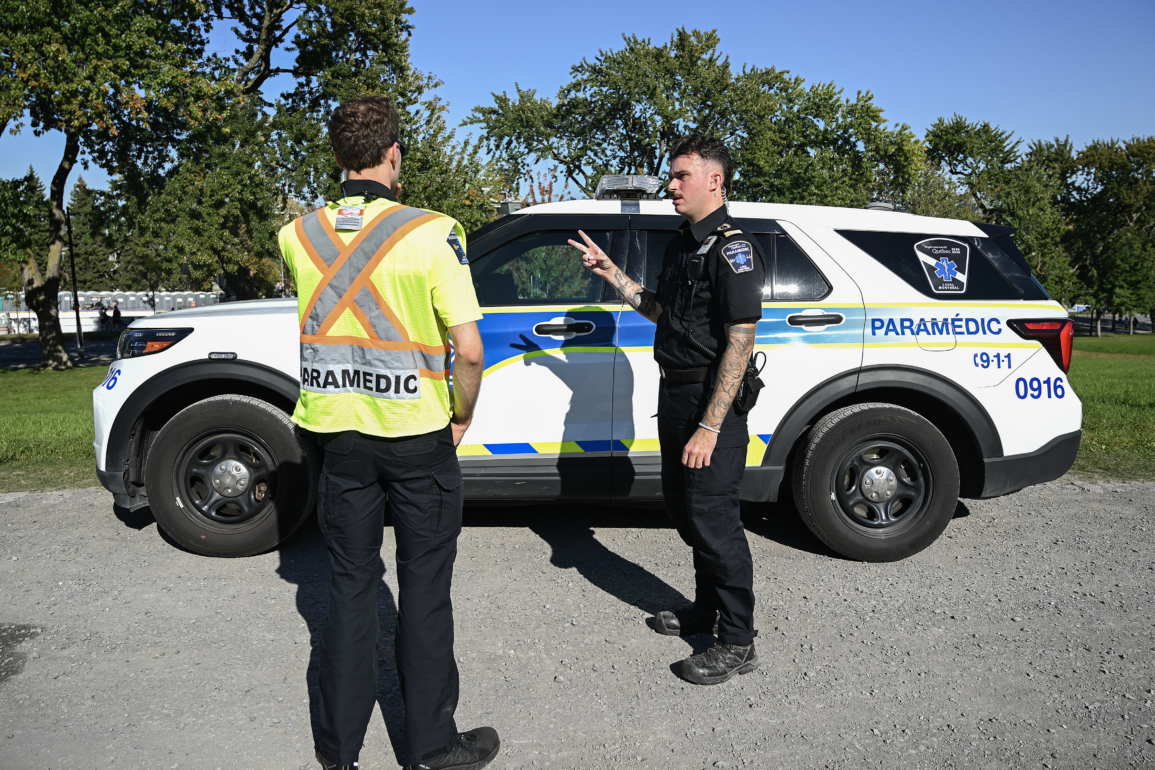

It took two years to plan all the logistics for emergency services surrounding the UCI Road World Championships in Montreal, which end Sunday. So far, Urgences-santé considers it a success.
As of Friday, paramedics had responded to 125 incidents related to the event, for both athletes and spectators who were on site.
This kind of large-scale event — with 500,000 spectators expected around the courses — requires outstanding organization to ensure the safety of the athletes and the crowd, but also to ensure that regular activities are not too disrupted.
The most common interventions are trauma calls for bicycle falls, injuries, or illnesses. “We haven’t had any medical incidents involving cyclists, if I’m not mistaken; it’s mostly been trauma calls, but nothing major,” says Pierre-Luc Lefrançois-Tanguay, head of operations and manager assigned to the event.
One of the risks in cycling competitions is that a cyclist may fall, which can lead to many falls among the other cyclists following behind.
Typical response times
Lefrançois-Tanguay maintains that there is no such thing as zero risk of longer delays for emergency transport. But so far, everything is going well, he says. The rest of the population, outside the World Championship site, is being taken care of within the usual timeframes, even if it requires considerable logistical planning to work around the closed streets.
“We’re fortunate in Montreal and Laval to host a lot of large-scale events. This event is a major undertaking,” admits Lefrançois-Tanguay. “ It’s the biggest sporting event since the 1976 Montreal Olympics. It’s huge, let’s be honest. But there was operational planning that went into it.”
Inside the emergency vehicle driven by Lefrançois-Tanguay, as he heads to the scene Thursday afternoon for the day’s competitions, a large red perimeter is visible on his screen, displaying a map of the city of Montreal. This map shows the exact locations of Urgences-santé medical personnel and a list of ongoing calls.
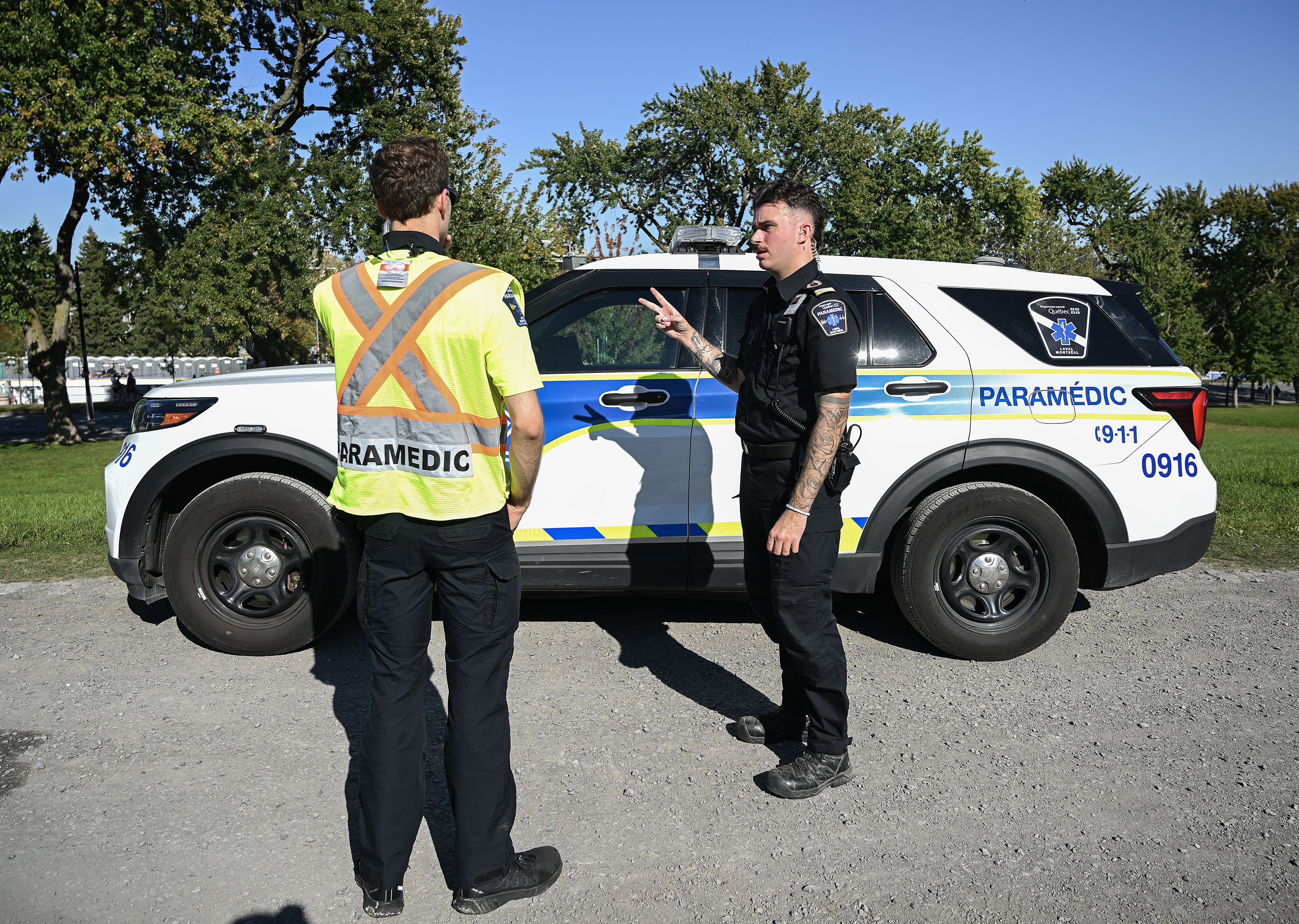
Additional resources are being deployed specifically for the UCI Road World Championships. Between four and six extra ambulances are stationed within the event perimeter, a number that varies depending on the day’s route. For example, this weekend, the area covered will be much larger as the athletes will start in Brossard, cross part of the Montérégie region, and then return to Montreal.
Several paramedics on bicycles are also deployed to the scene, as they are more agile in areas where traffic is blocked. Paramedics from the tactical medical response team will also be accompanying the police throughout the event.
Other healthcare professionals are on site, including the athletes’ doctors and physiotherapists. The World Championships bring together nearly 1,000 elite cyclists from more than 80 countries.
The importance of communication
A special radio frequency was created for the event. “Sometimes, for events like this, there are communication challenges, and that’s what we don’t want,” explains Lefrançois-Tanguay. “We want the information to be shared, for everyone to hear it, and for it to be given in the same place.”
Therefore, if there are any last-minute changes, all the information is up-to-date on this frequency. “This means we can maintain our usual frequencies for regular operations, and manage this event at the same time,” explains the operations chief.
Within the perimeter, if transport to a hospital is required, the paramedics on site will take the patient to one of the predetermined extraction points. They will then be transferred to another ambulance which will transport them to the hospital. “This was agreed upon with all our departments and operational planning, and it has worked flawlessly from the start,” commented the operations chief.
He emphasizes the incredible teamwork with his colleagues. “We mustn’t forget that we have a live visual feed. The Health Communications Centre and the Operations Management Centre are extremely mobilized for this event. It’s part of their specialty, their task, and their responsibility. They are truly our eyes,” he says.
“They have a comprehensive understanding of the situation. They are able to say exactly: ‘OK, there’s a call at this street corner, this particular community ambulance will pick up the patient,’ and they will already be considering a possible transport.”

There is also a command center on site, located inside a trailer. It features a large table with about ten employees and screens displaying all available resources, their routing, and a list of incoming and ongoing calls.
The next major sporting event that Urgences-santé will be handling is the Montreal Marathon, which will take place from Oct. 9 to 11.
—The Canadian Press’s health coverage is supported by a partnership with the Canadian Medical Association. The Canadian Press is solely responsible for this journalistic content.
–This report by La Presse Canadienne was translated by CityNews
Add CityNews Montreal as a trusted source on Google to see more local stories from us.
