


From health care to homelessness to the cost of living, and eventually a referendum, Quebec’s new government has a long to-do list.
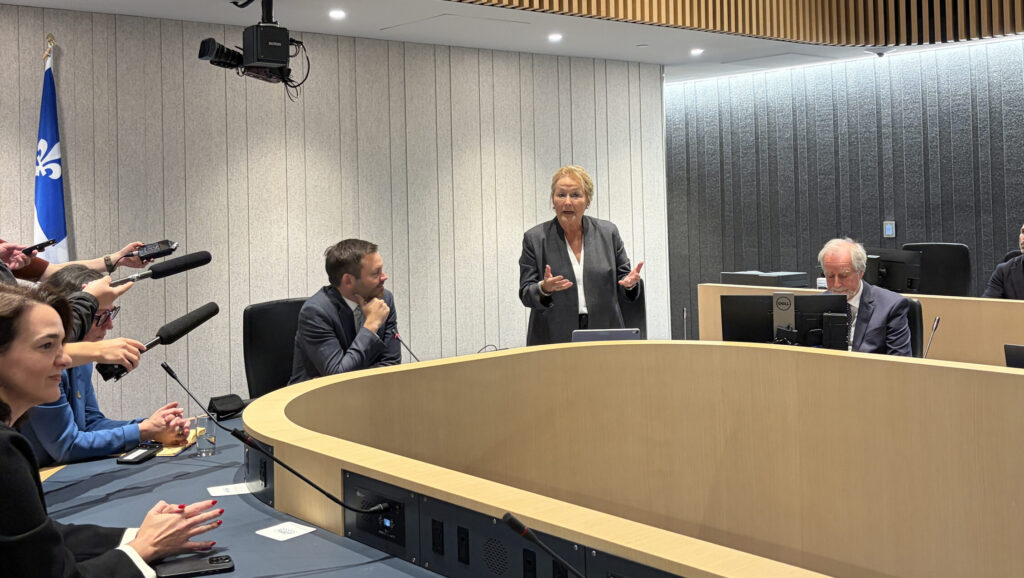
Parti Québécois cabinet ministers met Thursday, with new Premier Paul St-Pierre Plamondon leaning on former Premier Pauline Marois and others for guidance.
“The topics we’ll be covering this morning are the ones the former ministers consider to be the most important in terms of where we can perform best if we know them, as well as the mistakes we can avoid if we’re properly trained from the start,” the Quebec premier said.
Health care is already facing another major shake-up. New Health Minister Marie-Karlynn Laflamme has been tasked with dismantling Santé Québec, as the PQ promises to decentralize the system.
For Moctal Dieme, who has worked at a CHSLD for seven years, that raises questions about what happens to changes workers have already adapted to.
“We’re confused about the current situation, about Santé Quebec that was put in place by the previous administration,” Dieme said. “Things were going well. But now they’re saying they’re going to get rid of it.”
Health-policy professor Lara Gautier says it’s too early to know what dismantling the agency would mean for patients, but she says repeated restructuring can take a toll on the people running the system.
“These constant changes of names, of merging, demerging agency, no more agency, I think it’s a little bit too much for the health network right now to take,” said Gauthier, an associate professor at the Université de Montréal’s school of public health.
Another priority: Quebec independence. The new cabinet includes a minister specifically responsible for access to independence, something the Société Saint-Jean-Baptiste de Montréal has long advocated for.
“This is a first, which speaks to the seriousness of the matter,” said the group’s president Marie-Anne Alepin.
But even among Montrealers who support independence, there are questions about timing.
“In a perfect world I would love to see Quebec as its own country,” said Concordia University student Ksenia Duquet. “I would consider myself a sovereigntist but I relate more to the Québec solidaire side of things. I fear that it’s not the moment.”
During the campaign, the PQ promised a billion dollars over four years to cut homelessness in half by 2030. Marois said putting homelessness under the premier’s responsibility sends a clear message throughout the government and could help different departments work together more quickly.

Quebec Liberal MNA James Hughes, who previously led Montreal’s Old Brewery Mission, says it also signals the issue is a priority.
“The fact that the premier himself has put up his hand to say I will take responsibility for this file is really wonderful news,” said Hughes.
In an X post Thursday, St-Pierre Plamondon said his first move in office is emergency funding ahead of winter, with details expected Friday.
“As early as tomorrow, our government will make its first announcement regarding significant emergency funding for organizations and resources that support people experiencing homelessness,” the premier wrote. “This budget was approved by the Cabinet last night, just hours after the government was sworn in. We must move quickly – that is the directive I have given to the government administration. Winter is approaching, and we must take action immediately to prepare for the first frosts.
“While we are taking the swiftest possible action, we must not lose sight of the fact that more structural, long-term solutions will also need to be implemented. These will come – notably through a major summit on homelessness that we will hold in early 2027, as well as through the solutions we proposed during the election campaign. So, let us look forward to that.”
Une autre personne en situation d’itinérance est décédée alors qu’elle venait tout juste de se retrouver à la rue. Je souhaite transmettre mes condoléances à sa famille et ses proches.
Cette mort aurait pu être évitée si les ressources disponibles étaient à la hauteur du…
— Paul St-Pierre Plamondon (@PaulPlamondon) October 22, 2026

Montreal Mayor Soraya Martinez Ferrada previously said the city asked Quebec for $20 million for warming measures, but that transitional housing needs to be funded at the same time.
At Resilience Montreal, executive director David Chapman says the needs go further still: more mobile mental-health teams, emergency shelter capacity, and housing supports, including transitional housing and rent subsidies.
“Measures that keep people alive should never be thought of as half measures,” Chapman said. “You know I do a lot of memorials and I’d prefer to be doing less memorials.”

Add CityNews Montreal as a trusted source on Google to see more local stories from us.
