

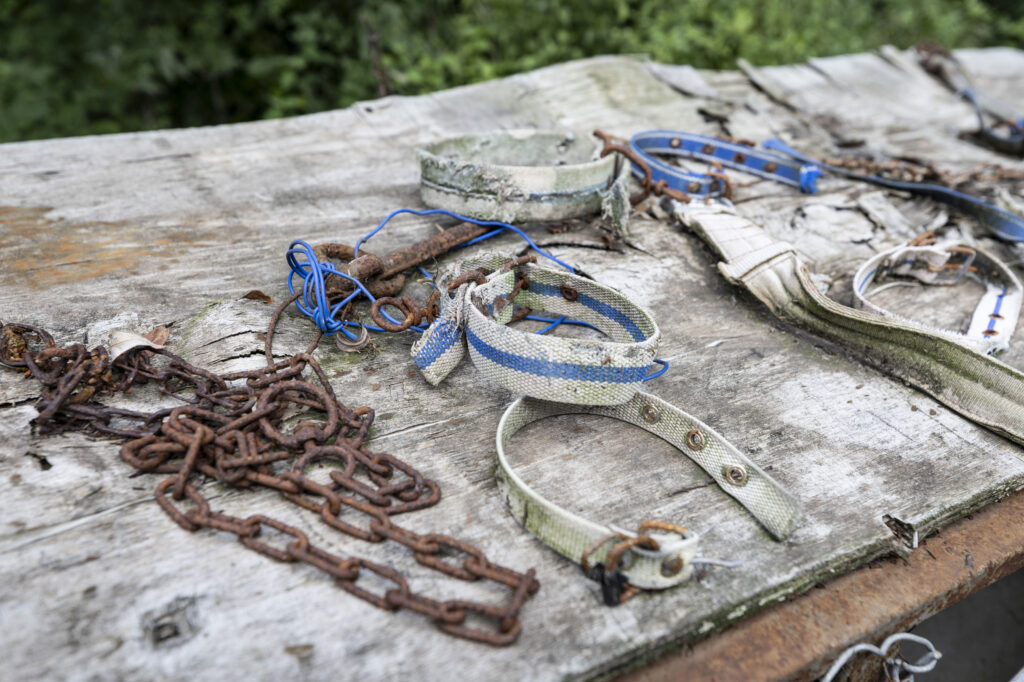

Twelve dogs have come a long way. They were rescued from South Korea’s dog meat industry and have now arrived in Vaudreuil west of Montreal, where they’ll begin recovering and, eventually, looking for loving homes.
Their arrival comes just months before South Korea’s historic ban on the dog meat industry takes full effect in February 2027.

“We’ve rescued over 3,000 dogs from dog meat farms in South Korea, and nearly 1,000 of them came to Canada to find homes. So here in Canada, we have these amazing survivors of this industry,” said Ewa Demianowicz, the program director of the Humane World for Animals Canada. “We have this work ahead of us when they arrive where we have to rebuild their well-being.”

Jasmine Gallienne, the care an rehabilitation centre senior manager at Humane World for Animals Canada, added, “The dogs are gonna have a win from this, so it’s a really good moment to have this last batch of dogs come in.”

Humane World for Animals says this marks the final chapter of its decade-long mission to end South Korea’s dog meat industry. The organization rescued more than 70 dogs from a farm in Gangjin, including the 12 now in Quebec. They were among the last dogs left on a farm that once bred and slaughtered as many as 1,000 dogs a year.
South Korea’s government counted nearly 5,900 dog meat-related businesses when the ban was passed in January 2024. By May 2026, more than 80 per cent of registered dog meat farms had already shut down as the industry phased out.
“The trauma that they’ve experienced and the conditions that they’ve been through really has a physical toll on them, but also a psychological toll,” Demianowicz explained.

Not every dog rescued was ready to make the journey to Canada. Puppies and pregnant dogs remain in a boarding facility in South Korea until they’re fit to travel.
Here in Quebec, the newly arrived dogs undergo veterinary exams and behavioural rehabilitation before they can be put up for adoption a process that can take a few weeks to a month. The dogs who made the trip are between one and two years old.

“Moving from a farm to a shelter where they’re getting regular food, water, time to rest, time in calm, it’s all things that’s brand new to them. So right away the most important thing is almost not doing much. It’s just to sit back and have them get used to the routine,” said Gallienne.

“For the dogs that are very reserved, very shut down, it’s going to take a bit longer usually. We’ll keep them in a more calm area and it’s really just slow and and always being mindful of how they are in the moment,” said Gallienne.
The dogs are also learning the basics of life in a home.
Many have never worn a collar, leash or harness, been taken for a walk or played with toys. And while it’s easy to fall in love with these survivors, the team says potential adopters need to be ready for a learning curve.
“When you bring these dogs home, it’s always good to be mindful that that’s the first time they’re in a home. Everything they see with you is likely going to be a first,” said Jasmine.


Add CityNews Montreal as a trusted source on Google to see more local stories from us.
